
How to Prevent Window Condensation in Cold Climates
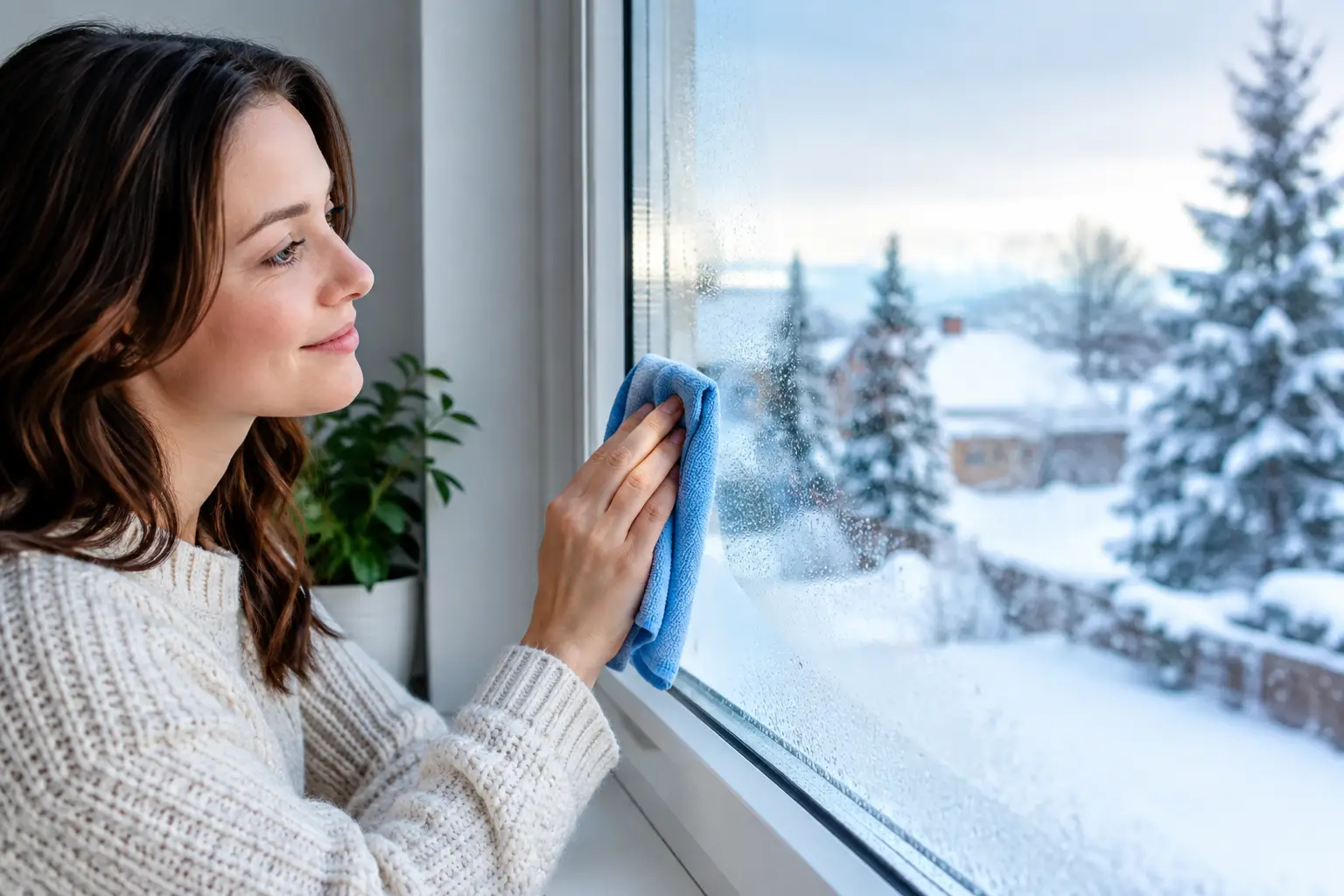
A beautifully detailed window can still collect water at the glass edge on a January morning. In a Rocky Mountain home, that moisture is not simply a cleaning issue. It is a visible signal that indoor humidity, glass temperature, air movement, and installation details need to be evaluated together. Knowing how to prevent window condensation starts with understanding where the water is forming and why.
Condensation occurs when warm, moisture-laden indoor air touches a surface that is colder than its dew point. The air releases moisture as liquid water on the glass, frame, or surrounding trim. During prolonged cold weather, that water can freeze, saturate finishes, and contribute to staining or microbial growth around the opening. The right response is rarely a single product or adjustment. It is a coordinated approach to indoor moisture and enclosure performance.
First, identify the type of condensation
Interior condensation forms on the room-facing surface of the glass or frame. This is the most common condition in winter and is usually connected to elevated indoor humidity, low interior glass temperatures, restricted airflow, or a combination of all three.
Exterior condensation forms on the outside face of the glass, often early in the morning. With high-performance insulated glazing, exterior condensation can indicate that the outer pane is staying cool because less interior heat is escaping through the unit. It generally dissipates as exterior temperatures rise and is not usually a performance concern.
Moisture between panes is different. It can appear as fogging or droplets inside the insulated glass unit, where it cannot be wiped away from either side. This typically indicates a failed edge seal and calls for professional assessment or glass-unit replacement. Lowering interior humidity will not correct it.
How to prevent window condensation at its source
The most effective strategy is to keep interior surfaces above the dew point while controlling the amount of moisture released into the home. In cold, dry climates, homes are often built tighter to conserve energy. That improves efficiency, but it also means everyday moisture from showers, cooking, plants, occupants, and humidifiers remains indoors longer.
Set humidity for the outdoor temperature
There is no single indoor humidity setting that works for every home or every week of the winter. As outdoor temperatures fall, the acceptable interior relative humidity must generally fall with them. A level that is comfortable at 35 degrees Fahrenheit may create condensation when temperatures drop well below zero.
A hygrometer provides a more reliable starting point than guesswork. Many homes perform well in the 30% to 40% relative humidity range during moderate winter conditions, but severe cold may require a temporary reduction. Large homes with expansive glazing, high ceilings, or substantial air volume may respond differently than smaller, tightly enclosed spaces.
Humidifiers deserve particular scrutiny. They can improve comfort, wood stability, and respiratory comfort during Colorado's dry winters, but an aggressively sized whole-home humidifier can introduce more moisture than the window system can reasonably manage during a cold snap. Set controls conservatively, verify the reading with an independent hygrometer, and adjust based on visible conditions at the glass.
Remove moisture where it is created
Bathrooms and kitchens produce concentrated bursts of water vapor. Run properly ducted exhaust fans during showers and cooking, then leave them operating long enough to clear residual moisture. A fan that vents into an attic, soffit, or wall cavity does not solve the problem and can create a far more serious one.
Drying clothes indoors, covering registers with furniture, maintaining large collections of plants, and storing firewood inside can also increase moisture loads. None of these conditions automatically causes window condensation, but several modest sources can add up in a tight home. If condensation is persistent, reduce these inputs before assuming the windows are at fault.
Balanced mechanical ventilation can be particularly valuable in well-sealed custom homes. Heat-recovery and energy-recovery ventilation systems exchange stale indoor air for fresh outdoor air while limiting unnecessary energy loss. The correct system, run time, and control strategy should be determined with the home's size, occupancy, and mechanical design in mind.
Keep warm air moving across the glass
Even a high-performance window needs exposure to room air. Heavy drapery closed tightly across the opening, deep shades, and interior shutters can trap a pocket of cool air against the glass. The room may be adequately heated while the concealed glass surface drops below the dew point.
Maintain a gap between window coverings and the glass, especially overnight during extreme weather. Keep supply registers clear and avoid placing large furniture directly in front of perimeter heat sources. In homes with radiant heating, where warm-air circulation is less pronounced, thoughtful shade selection and controlled humidity become even more consequential.
This does not mean sacrificing privacy or solar control. It means specifying treatments that accommodate airflow and using them with an understanding of the weather. During a period of unusually low temperatures, opening shades during the day and avoiding fully sealed coverings at night may materially reduce condensation.
Specify glazing and frames for the climate
Humidity management addresses the moisture side of the equation. Window performance addresses surface temperature. Better insulating glass, warmer-edge spacers, tightly engineered frames, and proper air sealing all help maintain a higher temperature on the interior face of the system.
Insulated glass units with low-emissivity coatings are central to that performance. Low-E2 glass, standard across ViewLux Colorado systems, is designed to reduce radiant heat transfer while preserving a refined visual connection to the landscape. The exact glazing build-up should still be selected for orientation, elevation, solar exposure, code requirements, and the desired balance between solar heat gain and insulation.
Frame construction matters as much as center-of-glass performance. Aluminum offers exceptional strength, narrow sightlines, and the ability to support large openings, but uninsulated aluminum readily conducts heat. Thermally broken aluminum systems interrupt that conductive path between the exterior and interior frame sections. This improves interior surface temperatures and reduces the likelihood of condensation at frame edges, where conventional assemblies are often most vulnerable.
High-performance systems reduce risk. They do not eliminate the physics of condensation if indoor humidity is excessive for outdoor conditions. A premium window should be evaluated as part of the full enclosure and mechanical strategy, not treated as an independent cure for a moisture-heavy interior environment.
Do not overlook installation and perimeter detailing
Condensation concentrated at one corner, along a jamb, or on adjacent drywall can point to an installation or enclosure issue rather than general indoor humidity. Gaps in air sealing, incomplete insulation around the rough opening, improperly integrated flashing, and thermal bridges at framing can create localized cold surfaces.
For new construction and major remodels, coordinate window placement, insulation continuity, water management, and interior finish details early. Large-format glass, corner conditions, and minimal-sightline assemblies demand particularly disciplined sequencing. The best-performing frame can be compromised by a poorly sealed rough opening or an interruption in the surrounding thermal layer.
If a window shows isolated or recurring moisture while comparable openings do not, document the conditions before making changes. Note outdoor temperature, indoor relative humidity, the location of the moisture, shade position, HVAC operation, and whether the condition appears after showers or cooking. This gives the builder, installer, or manufacturer useful evidence to distinguish routine condensation from a specific defect.
When condensation needs immediate attention
A light film of interior moisture during an abrupt temperature drop may be manageable with ventilation and humidity adjustments. Water running down glass, pooling on sills, frost that persists, peeling finish, soft trim, or staining around an opening should be addressed promptly. Repeated wetting can damage materials that were never intended to serve as a moisture-management surface.
Likewise, do not ignore fogging between panes or visible air leakage around the frame. Those symptoms warrant a professional review. The goal is not only to restore clarity and comfort, but to protect the performance of the wall assembly around the window.
Well-designed windows make expansive views possible in demanding climates, but they perform best when the home supports them with controlled humidity, intentional airflow, and precise installation. Watch the glass during the season's first cold spell. It offers one of the clearest, most immediate readings of how the house is managing heat and moisture.