
Do Aluminum Windows Condense in Winter Inside?
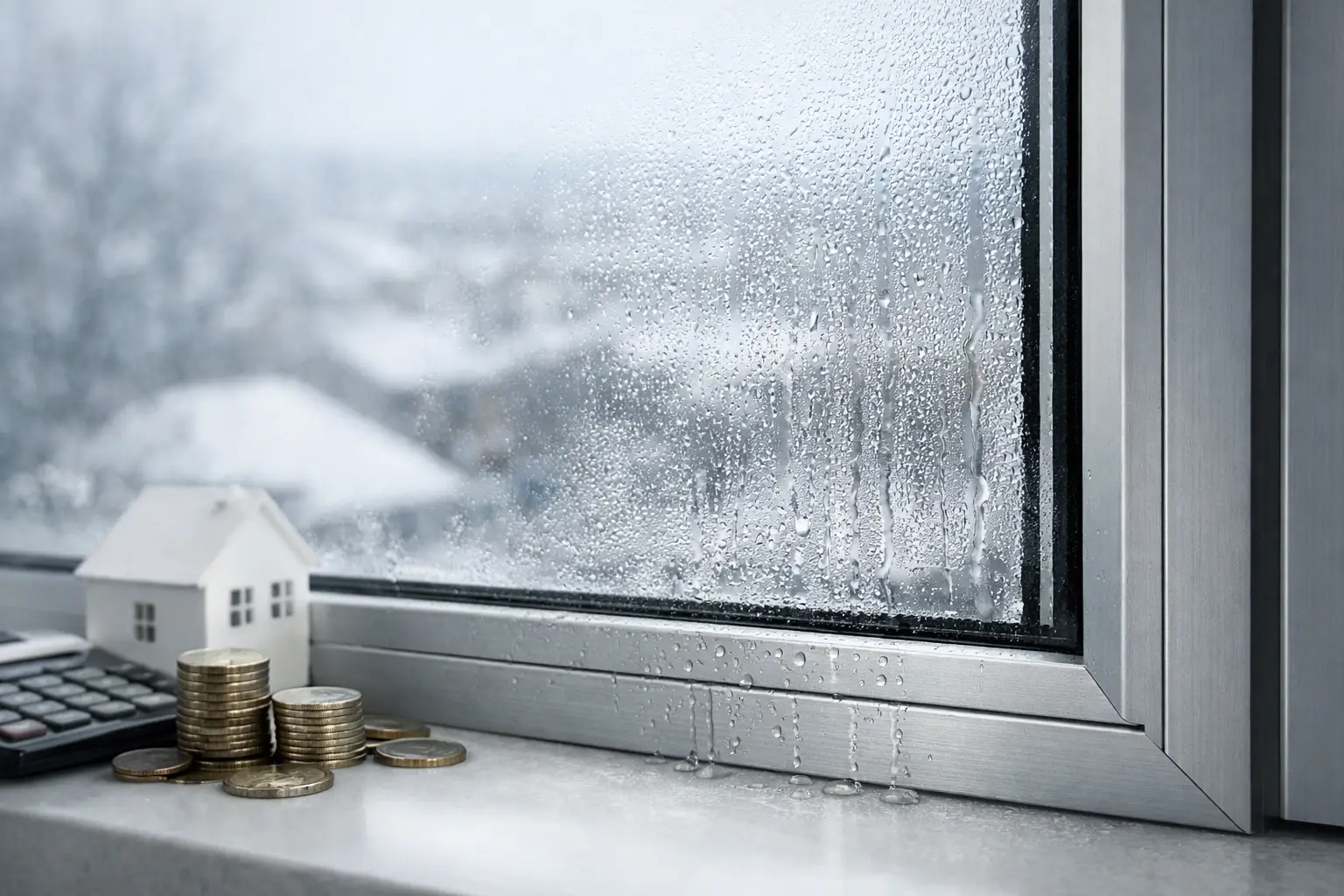
A refined aluminum window wall should not become a seasonal moisture problem. Yet the question, “do aluminum windows condense in winter,” deserves a qualified answer: they can, but well-engineered thermally broken aluminum systems are far less prone to it than conventional aluminum frames. Condensation is not simply a material failure. It occurs when a cold interior surface falls below the dew point of the indoor air, and that outcome is shaped by frame design, glazing, installation, and how the home manages humidity.
For custom homes in Colorado and other Rocky Mountain climates, the difference is significant. A large glass opening can deliver exceptional views and refined sightlines, but it must also manage severe temperature differentials between conditioned interiors and subfreezing exterior conditions.
Why aluminum windows condense in winter
Aluminum is naturally conductive. In an older, non-thermally broken frame, cold can travel rapidly from the exterior metal profile to the interior face of the window. When warm indoor air meets that chilled surface, water vapor can turn to liquid water. This is most often visible first at the lower corners of the glass, along the frame, or near the edge of the insulated glass unit.
The issue becomes more likely during a sharp cold snap, after a shower or cooking period, or in a tightly built home with elevated interior humidity. At 70°F indoors, air at 35 percent relative humidity has a much higher dew point than air at 20 percent relative humidity. A window that remains dry under one set of conditions may show temporary condensation under the other.
That distinction matters. Some brief interior condensation during extreme weather may indicate that indoor humidity is exceeding what the building enclosure can safely support at that outdoor temperature. Persistent water on frames, glass, or adjacent finishes is different. It calls for a closer review of the window system, glazing, air sealing, and interior moisture control.
Thermal breaks change aluminum window performance
A thermal break is an insulating barrier that separates the exterior and interior aluminum sections of a frame or sash. It interrupts the direct path of heat transfer through the metal, helping the interior-facing aluminum remain warmer in winter. A warmer surface is less likely to reach the dew point and collect moisture.
This is why not all aluminum windows should be evaluated as one category. Basic aluminum frames and high-performance thermally broken systems may share a material, but their cold-weather behavior is fundamentally different. The depth and composition of the thermal break, frame geometry, seals, glass specification, and manufacturing tolerances all influence the interior surface temperature.
For architectural projects with expansive openings, thermal performance must work alongside structural capability. Larger panels, slimmer profiles, and narrow sightlines place more demand on the frame and glass package. The correct solution is not to abandon aluminum. It is to specify aluminum engineered for the climate and opening size rather than relying on commodity framing designed for milder conditions.
Glass, spacers, and edge-of-glass temperatures
The glass unit is as important as the frame. Most winter condensation appears on the room-side glass because glass can become colder than surrounding wall surfaces. High-performance insulated glass units use multiple panes, sealed airspaces or gas fills, low-emissivity coatings, and warm-edge spacer technology to improve the room-side glass temperature.
Low-E glass reflects heat back toward the room while allowing useful daylight to enter. In cold weather, that helps retain interior heat and reduces the likelihood of condensation. The spacer at the perimeter of an insulated glass unit also deserves attention. Its location is often the coldest portion of the glass assembly, which is why condensation commonly begins near the edge before appearing at the center.
Glass selection should be coordinated with orientation and architectural intent. A south-facing elevation may benefit from a different solar heat gain strategy than a shaded north-facing wall. In mountain environments, designers must also account for elevation, intense sun, winter cold, and the risk of thermal stress. ViewLux Colorado specifies tempered LoE2 glass as standard, pairing a durable safety glass approach with thermal performance suited to demanding residential applications.
Do aluminum windows condense in winter even with thermal breaks?
Yes, they can. A thermal break reduces risk; it does not repeal the physics of dew point. Even a high-performance window may show interior condensation when outdoor temperatures plunge and indoor moisture levels remain high. The better question is whether the condensation is occasional and limited, or frequent enough to wet finishes, stain wood trim, encourage mold growth, or freeze along the sill.
Exterior condensation is different. Moisture on the outside face of glass in the morning can be a sign that the insulated glass unit is performing well. The exterior surface has become cool enough to meet the outdoor dew point because relatively little interior heat is escaping through the glass. While it may temporarily affect the view, exterior condensation is generally not a building-envelope concern.
Condensation between the panes is the condition that requires immediate attention. It typically indicates a failed insulated glass seal, allowing moisture into the sealed cavity. That cannot be corrected through ventilation or humidity adjustments and generally requires replacement of the insulated glass unit.
How to identify the source of condensation
The location and timing of moisture provide useful clues. Water only on the interior glass during an unusually cold morning often points to humidity and surface temperature. Moisture concentrated on the aluminum frame may indicate a weak thermal break, an uninsulated perimeter condition, or thermal bridging at adjacent construction. Condensation around a single opening rather than across the house may also suggest an installation or air-sealing issue.
A disciplined assessment should consider four conditions:
- Interior temperature and relative humidity, especially after showers, cooking, and overnight occupancy.
- Outdoor temperature and the duration of the cold event.
- The exact location of water: glass center, glass edge, frame, sill, or between panes.
- The condition of the surrounding wall, including air sealing, insulation continuity, flashing, and interior trim.
Do not assume the window alone is responsible. Air leakage around an opening can carry warm, humid indoor air into colder concealed cavities, where it condenses behind trim or within the wall assembly. That type of moisture is less visible but more consequential than a light film on the glass.
Specifying for dry, durable interiors
For a new build or major remodel, condensation control begins before the windows arrive on site. Select thermally broken aluminum frames with verified performance appropriate to the project’s climate zone. Pair them with insulated Low-E glass designed for the orientation, elevation, and energy targets of the home. Then ensure the window is integrated into a continuous air, water, and thermal barrier system.
Installation quality is not a secondary detail. Even an exceptional window can underperform if shims interrupt insulation, perimeter gaps are not properly sealed, or flashing does not direct incidental water to the exterior. Large-format systems require especially careful coordination among the window supplier, architect, builder, and installer because structural attachments, sill conditions, and transitions must accommodate both movement and weather exposure.
Inside the home, maintain winter humidity at a level compatible with outdoor temperatures. There is no single setting that works for every house. As temperatures fall, a lower indoor humidity target may be necessary to prevent condensation on any cold surface, including windows, doors, and even poorly insulated exterior walls. Balanced ventilation, correctly exhausted bathrooms, and kitchen ventilation all help manage the moisture load.
A well-specified aluminum system should support the architecture rather than ask the architecture to compromise. When frame thermal breaks, high-performance glass, precise installation, and realistic humidity control are considered together, aluminum windows can retain their crisp, modern character through winter without becoming a source of recurring moisture. That is the standard worth designing for: clear glass, dry interiors, and performance that remains composed when the temperature drops.