
Best Windows for Noise Reduction That Work
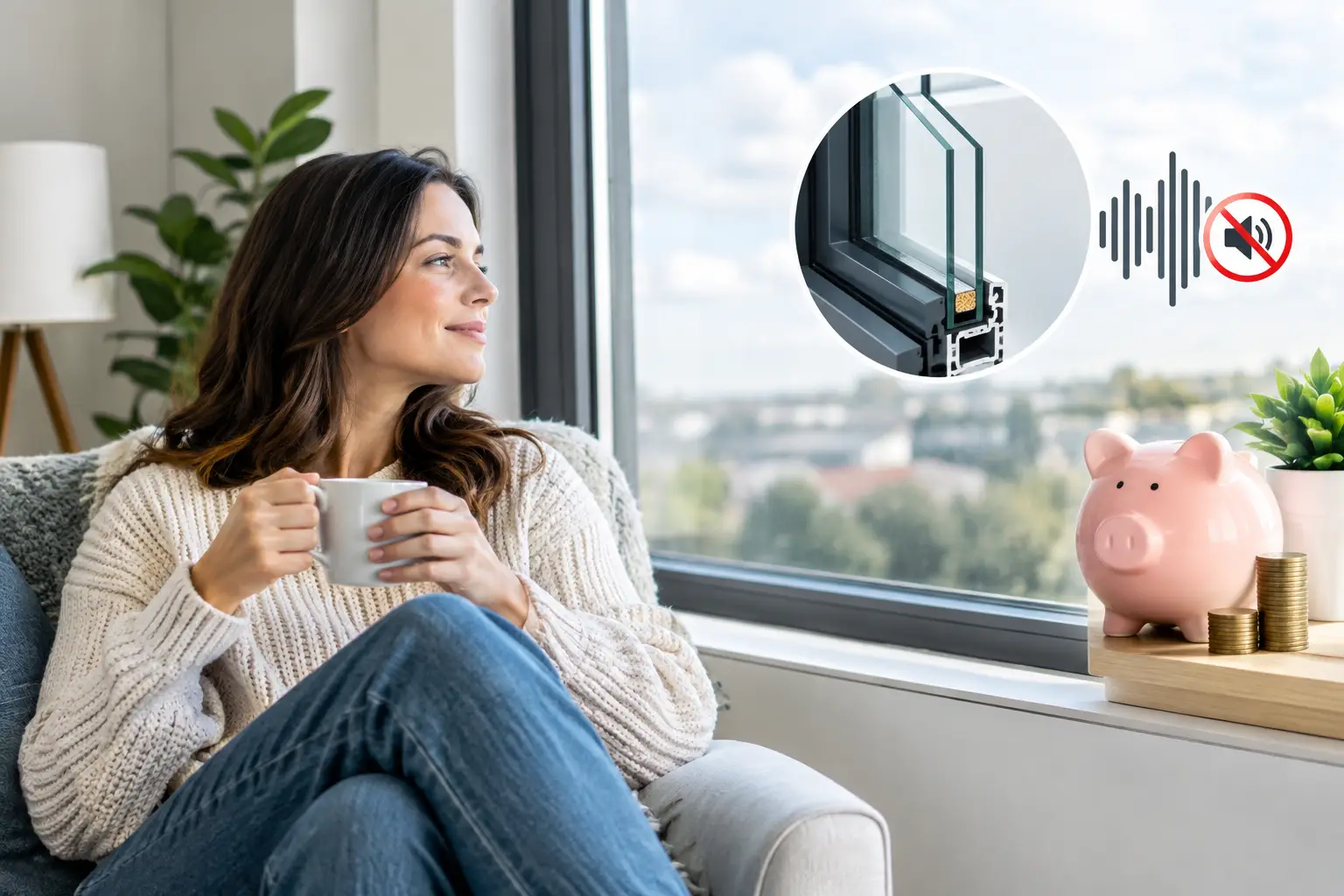
A quiet home is not created by thick glass alone. It is created by a complete opening system: glazing, frame, seals, hardware, wall connection, and installation working together. For homeowners and project teams comparing the best windows for noise reduction, that distinction matters. A high-performing window can materially reduce traffic, aircraft, wind, and neighborhood noise, but only when its acoustic specification matches the sound source and the realities of the building envelope.
For custom homes and architectural projects, the goal is rarely to eliminate every exterior sound. It is to lower intrusive noise to a level that supports rest, concentration, and refined indoor living without sacrificing daylight, views, thermal performance, or the clean sightlines the architecture demands.
What Makes a Window Effective at Reducing Noise?
Sound moves through the weakest available path. In a window opening, that can be the glass, but it can also be a loose sash, undersized weatherstripping, an unsealed perimeter joint, or a nearby wall assembly with lower acoustic performance than the window itself.
Window acoustics are generally discussed through two ratings: Sound Transmission Class, or STC, and Outdoor-Indoor Transmission Class, or OITC. STC is useful for common higher-frequency sounds such as conversation, television, and some urban activity. OITC places more weight on lower-frequency exterior noise, including road traffic, aircraft, trucks, and construction equipment. For a residence near a busy corridor, OITC is often the more relevant starting point.
Neither number should be reviewed in isolation. A published glazing or window rating is measured under controlled conditions. The installed result depends on the complete system, the size of the opening, the wall detail, and the quality of the field installation.
Glass Thickness and Asymmetry Matter
Two panes of equal-thickness glass can perform well thermally, but they are not always the strongest choice acoustically. Sound waves can excite equal glass lites at similar frequencies. Using dissimilar glass thicknesses helps disrupt that coincidence effect and broadens the range of frequencies the unit can attenuate.
A practical insulated glass unit might pair a thicker exterior lite with a thinner interior lite, selected around the project’s acoustic target and structural requirements. This approach is especially useful where traffic noise has both low-frequency rumble and sharper tire or brake noise. The exact makeup should be engineered rather than chosen from a generic glass schedule.
Laminated Glass Is Often the Major Upgrade
For many noise-exposed projects, acoustic laminated glass provides the most meaningful improvement. It uses an interlayer between glass lites that dampens vibration as sound energy passes through the glass. Specialty acoustic interlayers can outperform standard laminated constructions for targeted frequencies.
Laminated glass also brings secondary benefits that may be valuable in premium residential work: improved security, glass retention after breakage, and potential UV control depending on the selected build-up. It does add cost and weight, and it may affect available maximum sizes, hardware requirements, and lead times. Those trade-offs should be resolved early, particularly for oversized operable panels.
The Best Windows for Noise Reduction by Configuration
The best window type depends on whether the priority is maximum acoustic control, ventilation, egress, or a large uninterrupted view. In general, fixed windows are the easiest configuration to make acoustically strong because they have no operable sash or hardware clearances. A carefully designed fixed aluminum window with laminated, asymmetric insulated glass can be an excellent choice for a bedroom wall facing a road, a home office near an active street, or a view elevation exposed to wind.
Operable windows require more scrutiny. Their performance depends heavily on compression seals, locking points, frame rigidity, and manufacturing tolerances. Casement and awning windows often perform well because the sash closes against compression weatherstripping. When locked, the sash is drawn tightly into the frame, reducing air paths that carry sound.
Sliding windows and doors can achieve strong results in premium systems, but they are inherently more dependent on precise interlocks, brush seals, gaskets, and track design. They are appropriate where broad openings and modern horizontal movement are central to the architecture. For a façade with severe noise exposure, however, it is worth considering whether a fixed light can carry the primary view while smaller operable units provide controlled ventilation elsewhere.
Frame Material and Structural Stability
A frame does not need to be massive to perform well acoustically, but it must remain stable. Deflection, poor corner joinery, and inconsistent gasket pressure can create gaps that undermine even the most advanced glass package.
Thermally broken aluminum is well suited to large, design-forward openings because it combines structural strength with improved thermal separation between interior and exterior aluminum. That matters in Colorado and other Rocky Mountain climates, where large temperature swings place real demands on frame performance and perimeter seals. Slim aluminum sightlines can support expansive glass while preserving the refined proportions expected in contemporary residential architecture.
The thermal break itself is not an acoustic feature. Its value is that a properly engineered aluminum system can support demanding glazing, maintain alignment, and manage climate exposure without forcing a compromise between performance and visual restraint.
Glass Packages Must Balance Noise, Solar Control, and Comfort
Acoustic glazing should never be specified as though it exists apart from the rest of the glass package. Solar heat gain, visible light transmission, winter comfort, condensation resistance, and exterior reflection all influence the appropriate selection.
Low-E2 glass, for example, supports energy performance by managing radiant heat transfer. It does not automatically make a window quieter. The acoustic result comes from the total build-up: glass thickness, laminated interlayer, airspace, number of lites, and the integrity of the sealed unit. A high-performance specification can combine Low-E2 coatings with laminated glass and asymmetrical lites, but coating location and glass orientation should be coordinated by the manufacturer and design team.
Triple glazing can improve thermal performance and may improve sound control in certain constructions, yet it is not automatically superior for every acoustic condition. A well-designed double-pane unit with acoustic laminated glass and varied lite thicknesses can outperform a triple-pane unit that uses symmetrical glass and ordinary interlayers. Triple-pane assemblies are also heavier, which can influence sash size, hardware selection, and the visual weight of the frame.
Installation Is Where Acoustic Performance Is Won or Lost
A premium window cannot compensate for a poor installation. Even a narrow perimeter gap can admit a surprising amount of sound, particularly when wind pressure drives exterior air toward the opening.
The installation detail should establish continuous air sealing at the interior plane, reliable water management at the exterior plane, and appropriate insulation in the cavity between frame and rough opening. Low-expansion foam can be part of that assembly when used correctly, but it is not a substitute for a deliberate air-sealing strategy. Backer rod and compatible sealant are often required to create a durable, properly proportioned joint.
Acoustic performance also depends on adjacent construction. A window with a strong OITC rating installed in a lightly built wall, beneath a vented soffit, or beside an unsealed utility penetration will not deliver its full potential. For noise-sensitive rooms, review the entire exterior wall as a system, including ventilation openings, fireplaces, roof transitions, and door thresholds.
How to Specify Windows for a Noise-Exposed Project
Start by identifying the dominant sound, not by asking for the highest rating available. A home beside a highway needs a different strategy than a mountain residence affected by wind, a property under a flight path, or an infill project facing nightlife and pedestrian activity.
Then establish which elevations and rooms need the greatest protection. Bedrooms, nurseries, studies, and media rooms may justify acoustic laminated glass and fixed or compression-sealed operable configurations. Less sensitive spaces may use a standard high-performance insulated unit, preserving budget for the openings where it delivers the greatest return.
Finally, request performance information for the complete window system whenever possible, not only the center-of-glass value. Review maximum panel sizes, glazing options, frame depth, hardware, and installation requirements before finalizing the design. This avoids a common late-stage problem: a desired oversized operable panel that cannot carry the selected acoustic glass package within warranted limits.
ViewLux Colorado approaches these decisions as a system problem, pairing thermally broken aluminum frames, refined sightlines, and project-specific glazing options for demanding residential and architectural openings. Direct manufacturer coordination is particularly valuable when large spans, custom configurations, and climate-specific performance need to align.
The right acoustic window should feel almost invisible once installed. It should preserve the view, admit the desired light and ventilation, close with precision, and let the interior remain calm even when the surroundings are not.