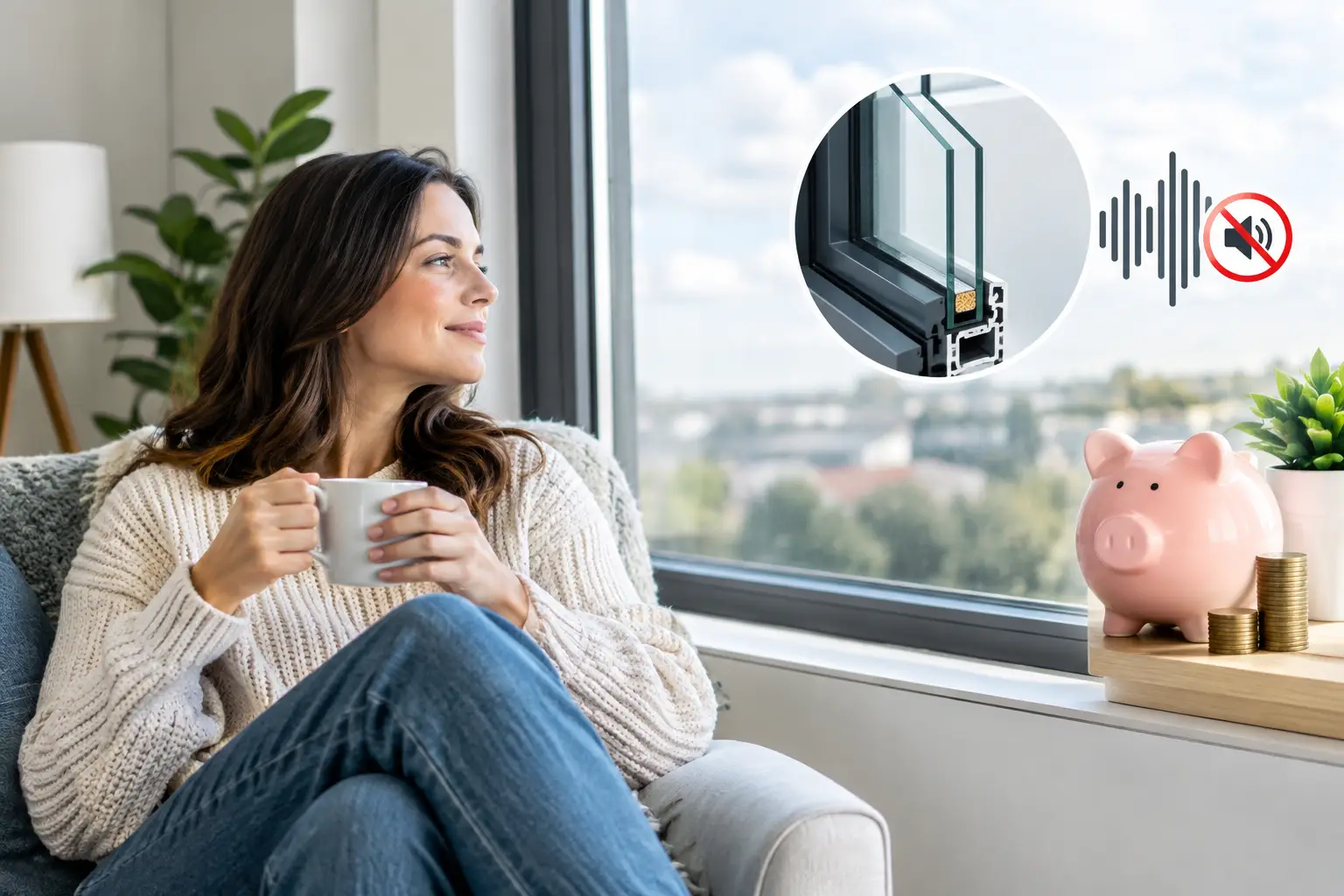
Top Insulated Glass Options for Mountain Homes
A large glass wall can frame the Front Range beautifully, but if the insulated unit is specified poorly, that same opening can create cold perimeter zones, glare, and uncomfortable radiant heat loss. The top insulated glass options balance thermal control with the qualities that make expansive glazing worth specifying: clear views, refined sightlines, and generous daylight.
For Colorado homes and architectural projects, the right choice is rarely just “double pane versus triple pane.” Glass selection is a coordinated decision involving coatings, gas fill, spacer technology, pane thickness, safety requirements, orientation, and the thermal performance of the surrounding aluminum frame. A well-engineered system treats the insulated glass unit as part of the complete window or door assembly, not as an isolated component.
What Defines Top Insulated Glass Options?
An insulated glass unit, often called an IGU, combines two or more panes of glass with sealed airspaces between them. Those spaces are typically filled with argon or another insulating gas, while low-emissivity coatings manage how heat moves through the glazing. The result is a clearer, more durable path to energy performance than a single pane of glass could provide.
The published performance numbers deserve close attention. U-factor measures the rate of heat loss, so lower values generally indicate better insulating performance. Solar heat gain coefficient, or SHGC, measures the portion of solar energy admitted through the glass. Visible transmittance measures daylight transmission. None of these values should be selected in isolation.
A south-facing living area with deep overhangs may benefit from a different SHGC than a west-facing great room with no exterior shading. A high-performance glass package that looks excellent on a specification sheet can still be wrong for a room if it makes the interior feel noticeably dim or blocks useful winter sun.
Double-Pane Low-E Glass: The Precise Baseline
For many premium residential applications, double-pane insulated glass with a high-quality Low-E coating and argon fill provides a strong balance of clarity, thermal control, weight, and cost. It is often the appropriate choice where window sizes are moderate, solar exposure is managed, and the surrounding frame has a credible thermal break.
Low-E coatings are microscopically thin metallic layers that reflect long-wave heat while allowing selected portions of visible light and solar energy to pass. The coating surface and formulation matter. Some are designed to retain interior heat effectively, while others are configured to reduce solar gain more aggressively.
ViewLux Colorado specifies tempered LoE2 glass as standard, bringing safety glass strength and a proven Low-E approach to the starting point of a high-performance glazing package. Tempered glass is particularly relevant in doors, large openings, low-level glazing, and other locations governed by safety glazing codes. It breaks into small fragments rather than sharp shards when it fails, but it must be fabricated to final size before tempering.
Double-pane units are not automatically inferior to triple-pane systems. In a well-designed thermally broken aluminum window, a carefully selected double-pane unit can deliver excellent comfort and preserve the slender profiles many contemporary projects require. The determining question is whether its assembly-level performance meets the demands of the elevation, orientation, and project energy target.
Triple-Pane Insulated Glass for Higher Thermal Demand
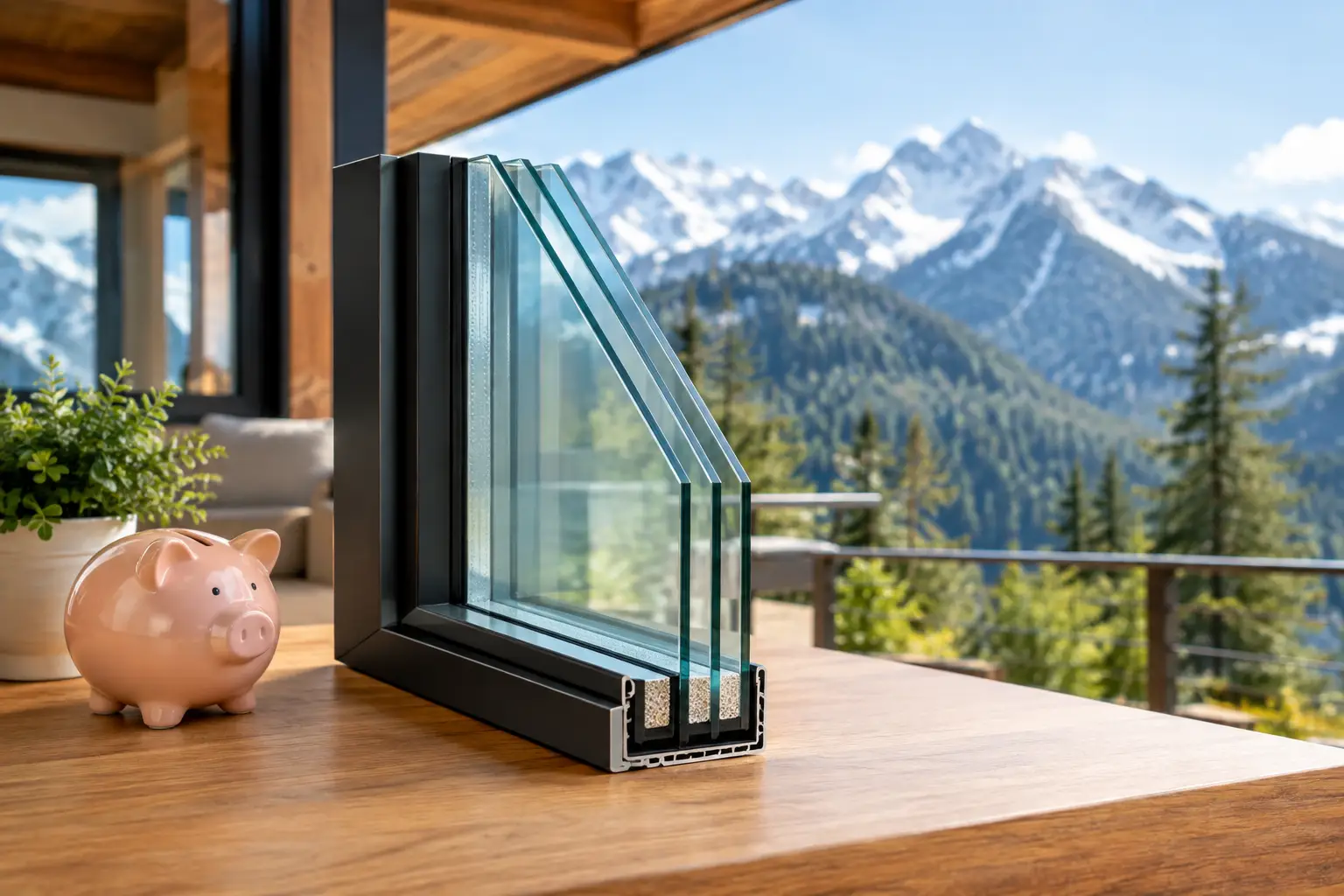
Triple-pane glass adds a third lite and a second insulating cavity. Its primary advantage is lower U-factor, which can improve interior glass temperatures during cold weather and reduce the sensation of sitting near a cold window. This matters in Colorado mountain homes, where clear nights and significant temperature swings can expose weak glazing decisions quickly.
The trade-offs are real. Triple-pane units are heavier, thicker, and generally more expensive. They can reduce visible light transmission depending on the coating strategy, and the added glass weight affects hardware, sash dimensions, structural calculations, and installation handling. In oversized operable panels, glass weight is not a minor detail. It is a core part of the system design.
Triple-pane glazing is most compelling for bedrooms, north-facing elevations, high-altitude construction, large fixed expanses where winter comfort is a priority, and projects pursuing demanding energy targets. It may be less necessary in a protected, solar-oriented opening where double-pane Low-E glass already provides the intended comfort and visual quality.
Gas Fill and Warm-Edge Spacers Matter
Argon gas is commonly used in insulated glass cavities because it conducts less heat than air. It is a practical, established choice for both double- and triple-pane configurations. Krypton can offer performance benefits in narrower spaces, but its higher cost means it is generally reserved for specialized applications rather than treated as a default upgrade.
Spacer design also deserves specification-level attention. The spacer separates the glass panes around the perimeter of the unit, and that edge is a common thermal weak point. Warm-edge spacers reduce conductive heat transfer compared with conventional metal spacers, helping improve edge-of-glass temperatures and reducing the potential for interior condensation under challenging conditions.
No glass package eliminates condensation risk in every circumstance. Indoor humidity, ventilation, exterior temperature, air movement, window geometry, and installation quality all influence what happens at the glass edge. Better glass can raise interior surface temperatures, but a home with elevated winter humidity can still create condensation conditions. That issue should be addressed through whole-home moisture management, not treated solely as a window problem.
Select Coatings by Orientation, Not by Habit
The best coating for one elevation can be the wrong one for another. A balanced Low-E coating can maintain a bright, neutral appearance while improving thermal performance across much of the home. In rooms exposed to severe afternoon sun, a lower-SHGC coating may better control overheating and protect finishes from excessive ultraviolet exposure.
South-facing glass requires more nuance. In Colorado, winter solar gain can be useful, particularly when thoughtful overhangs limit high summer sun. A very low-SHGC coating may reduce cooling demand but also forfeit some passive winter benefit. Architectural shading, roof geometry, interior use, and HVAC zoning should shape the decision.
West-facing glazing is often less forgiving. Late-day summer sun arrives at a low angle, can bypass horizontal overhangs, and creates glare when occupants are most likely to use living spaces. There, solar-control glass, exterior shading, or both may be warranted. The goal is not to eliminate daylight. It is to make daylight usable.
Safety, Acoustics, and Privacy Change the Glass Build-Up
Thermal performance is only one part of an insulated glass specification. Glass near doors, stairs, wet areas, floors, and other hazardous locations may require safety glazing under applicable building codes. Tempered glass satisfies many of these requirements, while laminated glass may be selected where post-breakage retention, acoustic control, security, or ultraviolet filtering is important.
Laminated glass uses an interlayer to hold the glass together after breakage. In a home near a busy road, it can be especially valuable when combined with asymmetric glass thicknesses that interrupt sound transmission more effectively than two equal lites. For a quiet mountain setting, laminated glass may instead be selected for oversized overhead glazing, railings, or security-sensitive areas.
Privacy is another design variable. Acid-etched, patterned, tinted, or fritted glass can protect sightlines without relying entirely on shades. These treatments affect visible light and solar behavior, so they should be evaluated as part of the complete IGU rather than added late as an aesthetic afterthought.
Specify the Whole Window or Door Assembly
A high-performance IGU cannot compensate for a poorly insulated frame, inadequate drainage, weak hardware, or imprecise installation. For thermally broken aluminum systems, the frame design is central to the final assembly U-factor and condensation resistance. The same principle applies to large sliding doors and pivot doors, where panel dimensions, rollers, locks, weather seals, and threshold transitions all influence real-world results.
Ask for performance data at the assembly level whenever possible. Center-of-glass numbers can make a glass package look stronger than the complete window or door will perform. Architects and builders should also coordinate glazing thickness, wind loads, opening size, elevation, safety requirements, and structural support early, particularly for corner systems and panoramic doors.
For high-elevation projects, confirm that the IGU construction is appropriate for pressure differences between the fabrication location and installation site. Changes in elevation can affect the appearance and stress behavior of sealed units. This is not a detail to leave until procurement, especially when the project includes large lites with minimal visual tolerance for distortion.
The right insulated glass should make a room feel composed rather than engineered around compromise. Specify for the view, the orientation, and the climate, then ensure the frame and installation are capable of carrying that performance through every season.