Best Windows for Mountain Climate Homes
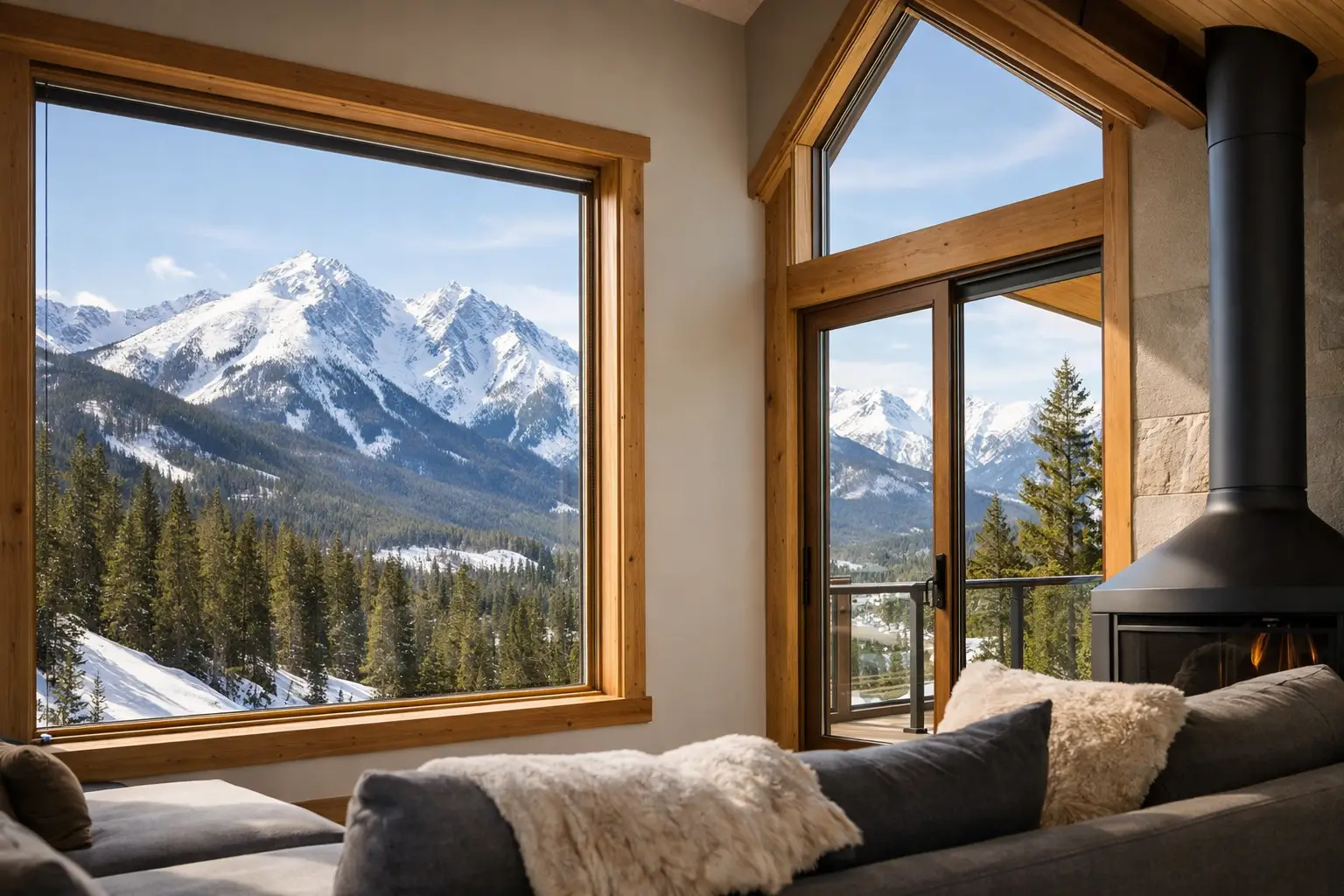
A wall of glass at 8,500 feet can be extraordinary - until winter sun, overnight temperature drops, wind exposure, and altitude turn a design feature into a performance problem. Choosing the best windows for mountain climate projects is less about a style trend and more about how the full system manages thermal movement, solar gain, condensation risk, and structural demand.
In the Rockies, window specification has to work harder. High UV exposure, freeze-thaw cycles, snow load, large daily temperature swings, and strong winds all put pressure on glass, frames, seals, and installation details. That is why the right answer is rarely a single window type. It is a combination of frame technology, glazing strategy, operability, orientation, and project-specific engineering.
What defines the best windows for mountain climate conditions?
The best-performing mountain window is not simply the one with the lowest published U-factor. That number matters, but it does not tell the whole story. In a high-elevation environment, real performance depends on how the frame and glass perform together, how tightly the unit controls air infiltration, and how well the system tolerates expansion, contraction, and weather exposure over time.
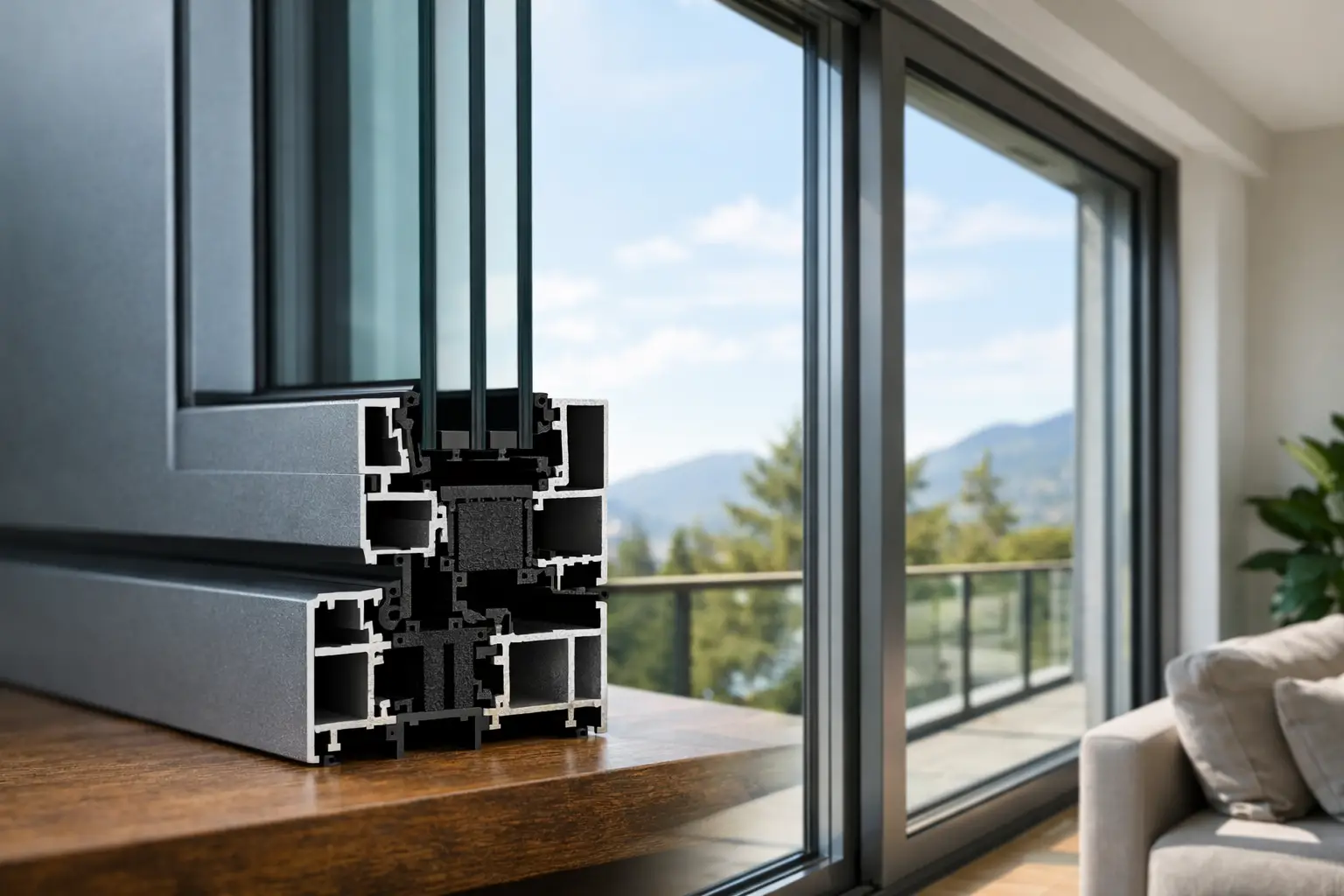
Thermal performance should start with the frame. Thermally broken aluminum deserves close attention in premium mountain construction because it offers the structural strength and refined sightlines architects want, while separating interior and exterior metal surfaces to reduce heat transfer. Without a true thermal break, aluminum can become a liability in cold climates. With advanced thermal engineering, it becomes a viable choice for large openings and modern detailing.
Glass specification is equally critical. Double-pane units may be appropriate in some lower-exposure applications, but many mountain homes benefit from high-performance triple-pane glazing or carefully tuned insulated glass packages with low-E coatings, warm-edge spacers, and gas fills. The right package depends on elevation, orientation, and the balance between heat retention and solar control.
Air infiltration often gets less attention than it should. In exposed mountain locations, a window that performs well in lab metrics but leaks under real wind pressure can create discomfort quickly. Drafts, perimeter condensation, and uneven room temperatures are often signs that air tightness or installation quality was undervalued.
Frame material matters more in the mountains
Vinyl, wood, fiberglass, and aluminum all have a place in residential construction, but mountain projects usually expose the limitations of lower-tier systems. Material selection should be based on both performance and architectural intent.
Wood offers warmth and traditional appeal, but it requires maintenance and can be vulnerable to moisture cycling, intense UV, and long-term movement if not properly protected. For certain alpine homes, that trade-off may be acceptable. For contemporary residences with larger glazed openings and a reduced maintenance goal, it often is not.
Vinyl can deliver respectable thermal values at lower price points, but premium mountain homes frequently run into its constraints. Large dimensions, darker finishes, stronger solar exposure, and elevated design expectations can push vinyl beyond where it feels appropriate. Sightlines are typically bulkier, and structural rigidity is more limited.
Fiberglass performs well thermally and dimensionally, and in many cases it is a solid mountain-climate option. The trade-off is usually in design flexibility, profile refinement, and the ability to support certain large-scale architectural expressions.
Thermally broken aluminum is often the strongest fit for modern mountain architecture because it combines narrow profiles, structural integrity, finish durability, and precise fabrication. For architects and builders working with expansive views, corner conditions, oversized casements, or large sliding systems, that combination is difficult to match. The key qualifier is simple: it must be a genuinely high-performance thermally broken system, not aluminum treated as a commodity product.
Glazing strategy should follow orientation, not habit
Glass packages should be specified by facade, not copied across the entire house. That is especially true in mountain regions, where solar conditions can vary sharply between exposures and seasons.
South-facing glass can be an asset in winter if solar heat gain is welcomed and controlled. In the right design, that sunlight offsets heating demand and adds comfort. But too much gain, especially in homes with large unshaded expanses, can create overheating even when outdoor temperatures are low.
West-facing elevations are often less forgiving. Afternoon sun at altitude can be intense, and glare becomes a real comfort issue. East-facing glass may be easier to manage, while north-facing openings usually place more emphasis on insulation because direct solar contribution is limited.
That is why the best windows for mountain climate homes often involve different low-E coatings or glazing configurations depending on orientation. Uniformity may simplify ordering, but it can compromise the building's actual performance. High-end fenestration should be tuned, not generalized.
The best operating style depends on the opening
There is no universal "best" window type for every room. Performance should follow the purpose of the opening.
Casement and awning windows are often strong choices for mountain environments because compression seals can deliver excellent air tightness when the sash is closed and locked. In windy, cold conditions, that matters. They also support controlled ventilation, which is valuable when outdoor air is crisp but temperatures are low.
Fixed windows are ideal where the priority is view, daylight, and thermal efficiency. Because they do not operate, they can often achieve stronger overall performance and cleaner sightlines than operable units. In many luxury mountain homes, the most effective composition pairs fixed glass for major view corridors with operable units placed strategically for ventilation.
Sliding windows are convenient and visually quiet, but they generally do not seal as tightly as well-engineered casement or awning systems. That does not mean they are wrong for a mountain house. It means they should be used with intent, especially in less exposed areas or where operation, size, or layout makes them the better fit.
Double-hung windows are usually selected for aesthetic reasons rather than peak thermal or air performance. In a traditional mountain residence they may still be appropriate, but in modern high-performance homes they are rarely the first specification.
Large glass can work - if the system is engineered for it
Many mountain clients want uninterrupted views, and understandably so. The challenge is that larger glass dimensions magnify every weakness in a window system. Deflection, edge-of-glass temperature, hardware load, installation tolerances, and frame expansion all become more consequential as openings increase.
This is where premium systems separate themselves. A window designed for larger spans should maintain structural stability without resorting to heavy visual bulk. It should support glass packages appropriate to climate exposure, preserve thermal continuity, and integrate cleanly with demanding wall assemblies.
For custom homes with modern lines, refined sightlines are not just aesthetic. They influence daylight quality, perceived openness, and the success of the architecture as a whole. The best specification is one that protects the view without asking the envelope to compromise.
Installation quality is part of window performance
A high-spec product installed poorly is still a poor result. Mountain projects demand careful integration with the wall system, especially where snow, wind-driven moisture, and deep thermal differentials are expected.
Rough opening preparation, shimming, perimeter insulation, flashing sequence, and air-water barrier continuity all affect how a window performs once weather arrives. So does coordination between manufacturer, architect, builder, and installer. On custom projects, details should be resolved early, not improvised on site.
This is one reason factory-direct collaboration can be valuable. When the manufacturer is involved at the project level, questions around sizing, mull conditions, glazing limitations, and installation interfaces are easier to address before they become field issues. For design-driven Rocky Mountain work, that coordination is often as important as the window itself.
How to evaluate the right system for your project
If you are comparing options, start with five questions. How exposed is the site to wind and weather? What elevations carry the most glass? Which facades need solar gain and which need control? How large are the openings? And how important are narrow sightlines to the architectural intent?
Those answers usually narrow the field quickly. A heavily exposed ridge-top home with expansive glazing and a modern aesthetic will call for a different solution than a sheltered mountain valley residence with smaller punched openings. Both may require high thermal performance, but the structural and design demands are not the same.
Published performance data matters, but so does product category. Ask whether the system was genuinely developed for demanding climates or simply adapted for them. Ask how it handles larger dimensions. Ask what frame technology is doing the thermal work. And ask whether the manufacturer can support project-specific configurations rather than forcing the design into standard modules.
For many high-end Rocky Mountain projects, the strongest answer is a thermally broken aluminum platform with glazing tailored to exposure, a thoughtful mix of fixed and operable units, and detailing disciplined enough to preserve both aesthetics and envelope performance. That is the territory where companies such as ViewLux Colorado are positioned to add real value.
The right mountain window should feel quiet on a windy night, stable in deep winter, and visually effortless year-round. If the system is doing its job, you notice the light, the view, and the architecture - not the glass between you and the landscape.