Triple Pane vs Double Pane Windows
A west-facing glass wall can feel exceptional in October and punishing in July. In January, that same opening can become the coldest surface in the room if the glazing package is underspecified. That is why the triple pane vs double pane decision matters well beyond a simple upgrade line item. For custom homes, large openings, and thermally demanding elevations, glass selection directly affects comfort, HVAC sizing, condensation resistance, and the visual quality of the finished envelope.
For design-driven residential projects, the right answer is rarely universal. Triple pane glazing can deliver meaningful gains in interior comfort and winter performance, but double pane units still make sense in many applications, especially where solar heat gain, frame dimensions, budget, and operability need to stay in balance. The correct specification depends on climate exposure, orientation, opening size, and the performance level of the complete window system, not just the insulated glass unit.
Triple pane vs double pane: what changes in the assembly
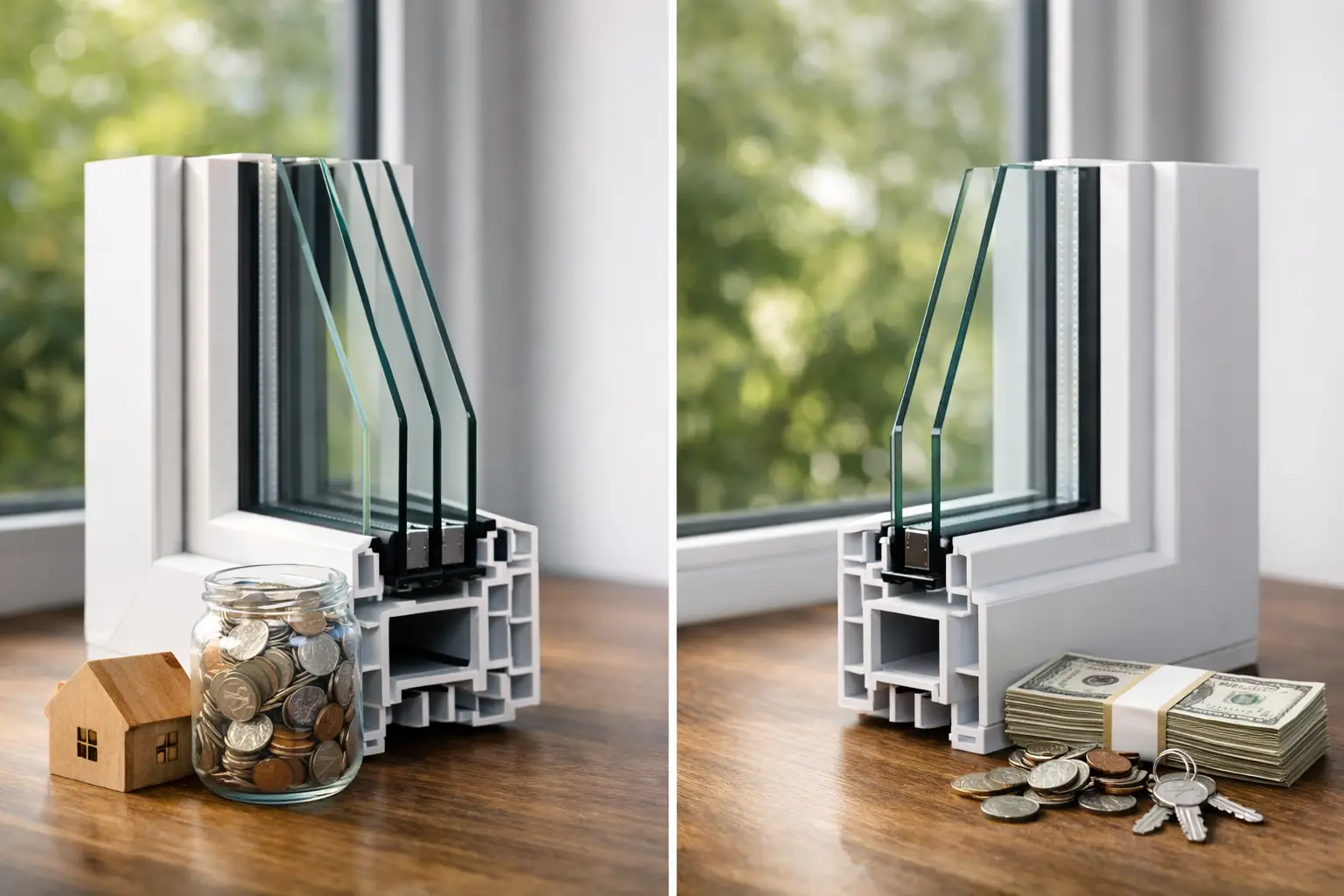
The basic difference is straightforward. Double pane glass uses two lites of glass with one sealed airspace or gas-filled cavity between them. Triple pane uses three lites with two cavities. That additional lite and cavity improve thermal resistance, but they also increase weight, thickness, and cost.
In practice, the discussion is more technical than pane count alone. Low-E coatings, gas fill, spacer technology, glass thickness, and frame design all influence the final result. A well-engineered double pane unit with a high-performance Low-E coating and thermally broken frame can outperform a poorly executed triple pane package. Conversely, a premium triple pane assembly in a thermally advanced aluminum system can materially reduce heat transfer in a way occupants notice every day.
This is especially relevant in mountain and high-plains conditions, where large day-to-night swings, winter cold, high solar exposure, and elevation place real demands on the envelope.
Thermal performance is the main reason triple pane is specified
If the project priority is lower U-values and warmer interior glass temperatures, triple pane has the edge. The second cavity slows conductive heat loss and helps keep the interior lite closer to room temperature during winter conditions. That often translates to a more comfortable perimeter zone, particularly near expansive glass, corner windows, and tall units where occupants spend time close to the opening.
Warmer interior glass also helps reduce the likelihood of interior condensation. This matters in homes with tighter envelopes, higher indoor humidity, or rooms like kitchens and primary baths where moisture loads are higher. Condensation is not only a nuisance. Over time, it can affect adjacent finishes, trim details, and overall occupant comfort.
That said, thermal performance should be evaluated at the system level. The glass may improve, but the frame still matters. In aluminum windows and doors, thermal breaks are essential. Without a properly engineered thermal barrier, the performance gains of triple pane glass can be diluted by frame conductivity.
Double pane still has real advantages
Double pane remains a strong specification for many premium homes. It is lighter, generally more economical, and often sufficient when paired with advanced coatings and a high-quality frame. In moderate exposures or in areas where passive solar gain is desirable, double pane can be the more balanced choice.
Weight is not a minor detail. Heavier insulated glass units affect hardware loads, sash dimensions, operation, and fabrication constraints. On large operable units such as casements, awnings, sliders, and lift-slide doors, extra glass weight can influence what is structurally practical and how refined the sightlines can remain.
For architects pursuing minimal profiles and large openings, this trade-off deserves attention early. Triple pane may improve thermal numbers, but if it forces compromises in sash proportions, hardware strategy, or panel size, the net design outcome may not be better.
Solar gain can shift the recommendation
Many buyers assume triple pane is always superior because it insulates better. That is not automatically true once solar heat gain enters the conversation. In cold climates with meaningful winter sun, solar gain can be beneficial. South-facing glazing, for example, may perform very differently from shaded north-facing openings.
A triple pane unit with more coatings and lower solar heat gain can reduce overheating in summer, but it can also limit passive winter contribution. Double pane glass may admit more solar energy depending on the coating package selected. On some projects, that is useful. On others, especially homes with broad west exposures or insufficient shading, it becomes a liability.
This is why specification should be elevation-specific, not one-size-fits-all. A house may reasonably use different glass packages on different orientations. The goal is not simply the lowest number on paper. It is controlled solar gain, strong comfort performance, and visual clarity that suit the building as designed.
Acoustic performance improves with triple pane, but not always dramatically
Triple pane is often assumed to be much quieter, and in some conditions it is. The added lite and airspace can improve sound attenuation, especially when combined with dissimilar glass thicknesses or laminated construction. But pane count alone does not guarantee a major acoustic jump.
If road noise, wind exposure, or neighborhood sound control is a priority, the glass makeup should be reviewed specifically for acoustics. In some cases, a laminated double pane unit may outperform a standard triple pane configuration for certain frequencies. For homes near traffic corridors or exposed ridgelines, acoustic design deserves its own discussion rather than being treated as a side benefit.
Cost matters, but so does where you spend it
The price difference between triple and double pane varies by system, size, and project complexity. Triple pane generally carries a premium due to extra material, added weight, and the fabrication demands of thicker insulated glass units. For a large custom home, that increase can be significant.
The better question is whether the added cost produces meaningful value in the spaces that matter most. Bedrooms, primary living areas, double-height great rooms, and exposed elevations often justify higher-performance glazing more readily than secondary spaces. If the budget is finite, strategic deployment usually performs better than making blanket decisions.
In premium residential work, it is also worth considering downstream effects. Better glazing can improve comfort enough to reduce the perceived need for perimeter heat, mitigate complaints near large glass expanses, and support a more confident use of expansive modern fenestration. Those benefits are not always captured by a simple payback calculation.
Triple pane vs double pane in Colorado and similar climates
For Colorado projects, the answer often depends on elevation, orientation, glazing area, and how much glass the design is asking the envelope to carry. In lower-elevation urban settings with balanced window-to-wall ratios, a high-quality double pane system may be entirely appropriate. In colder mountain locations, exposed sites, or homes with large fixed glass and oversized operables, triple pane becomes more compelling.
Modern architecture complicates the decision in a good way. Large spans of glass, narrow frames, and indoor-outdoor openings can absolutely be achieved with strong thermal performance, but only when frame engineering, glass specification, and hardware are considered together. This is where factory-level coordination matters. ViewLux Colorado approaches this through thermally broken aluminum systems, specification-driven glass options, and project support that aligns performance targets with the architectural intent.
What to ask before you choose
The most useful conversations are not about whether triple pane is categorically better. They are about where the home loses heat, where it gains unwanted solar load, and which openings drive comfort complaints if they are underspecified.
Ask for whole-system U-values, not glass-center numbers alone. Review solar heat gain coefficient by orientation. Confirm whether interior condensation resistance is a concern. For operable units, evaluate the effect of glass weight on panel size and hardware. And if the project includes large aluminum systems, make sure the thermal break strategy is doing real work.
A premium window package should not force a choice between refined sightlines and credible performance. It should be engineered to support both.
The best glazing decision usually comes from resisting absolutes. Triple pane is often the right move for demanding exposures and higher-performance homes. Double pane remains a valid, intelligent specification when used deliberately. What matters is not choosing the most glass, but choosing the assembly that makes the building feel as good as it looks.