Aluminum Windows vs Fiberglass for Modern Homes
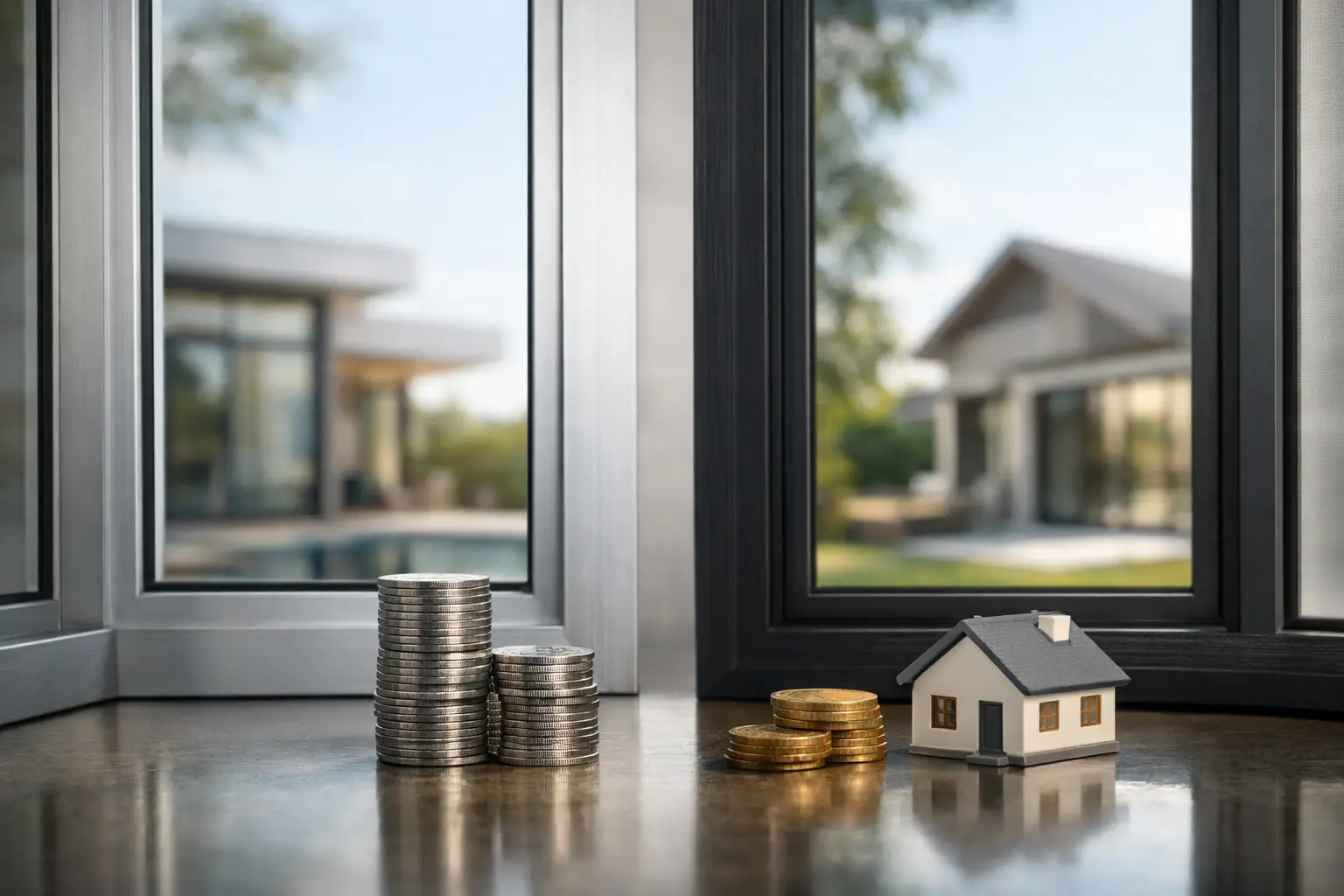
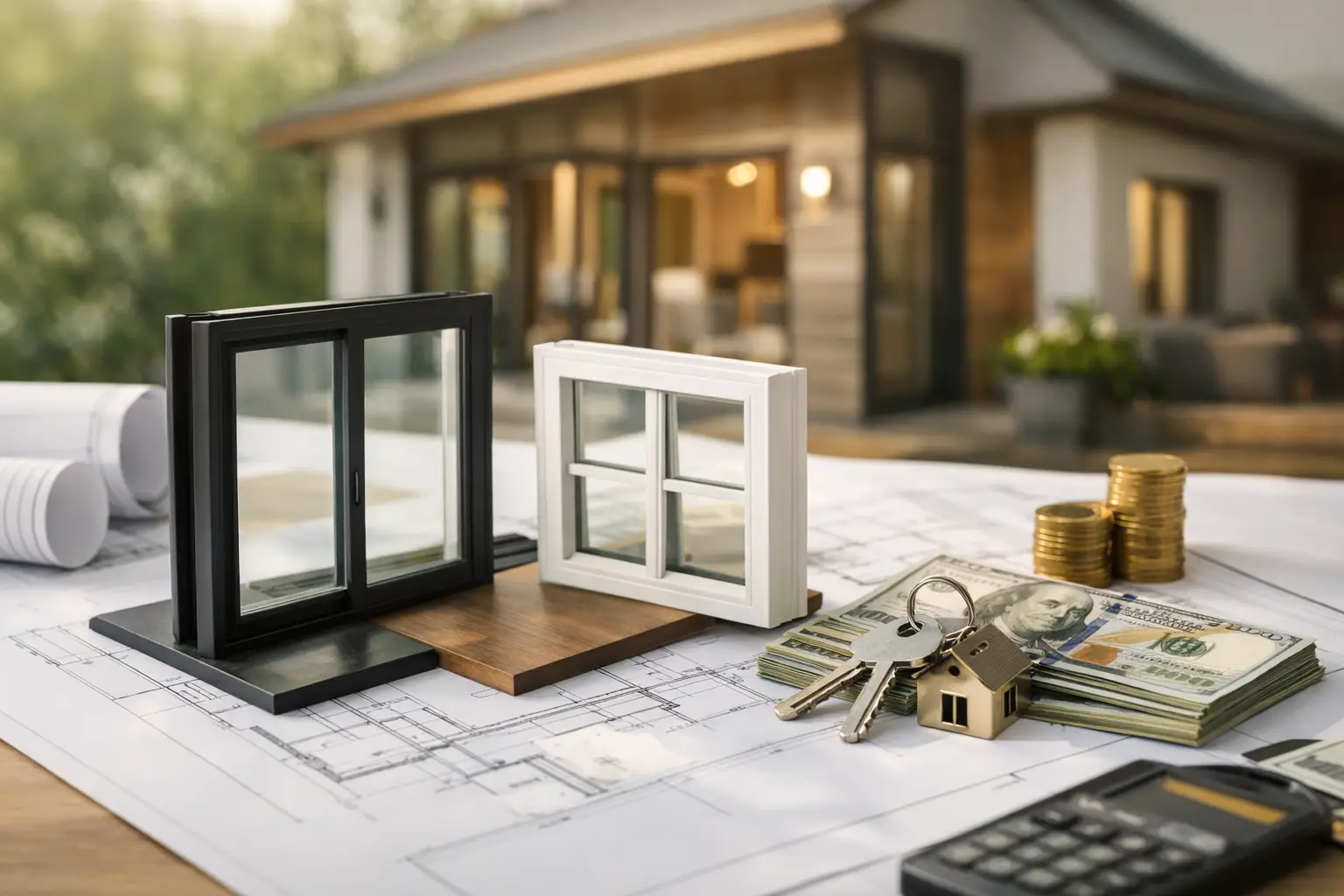
A window schedule can look resolved on paper until the material choice begins to affect the architecture. In the aluminum windows vs fiberglass decision, the real question is not which material is universally better. It is which system can meet the opening size, thermal target, sightline, finish, and installation conditions of a specific project.
For custom homes and architectural projects in Colorado, that decision carries additional weight. Window frames must manage intense sun, dry air, wind exposure, elevation, and substantial seasonal temperature swings while preserving the clean, expansive glass aesthetic many contemporary designs require.
Aluminum Windows vs Fiberglass: The Core Difference
Aluminum and fiberglass are both credible alternatives to conventional vinyl windows, especially where a project calls for greater durability and a more refined architectural expression. Their differences begin with how each material handles structure and heat.
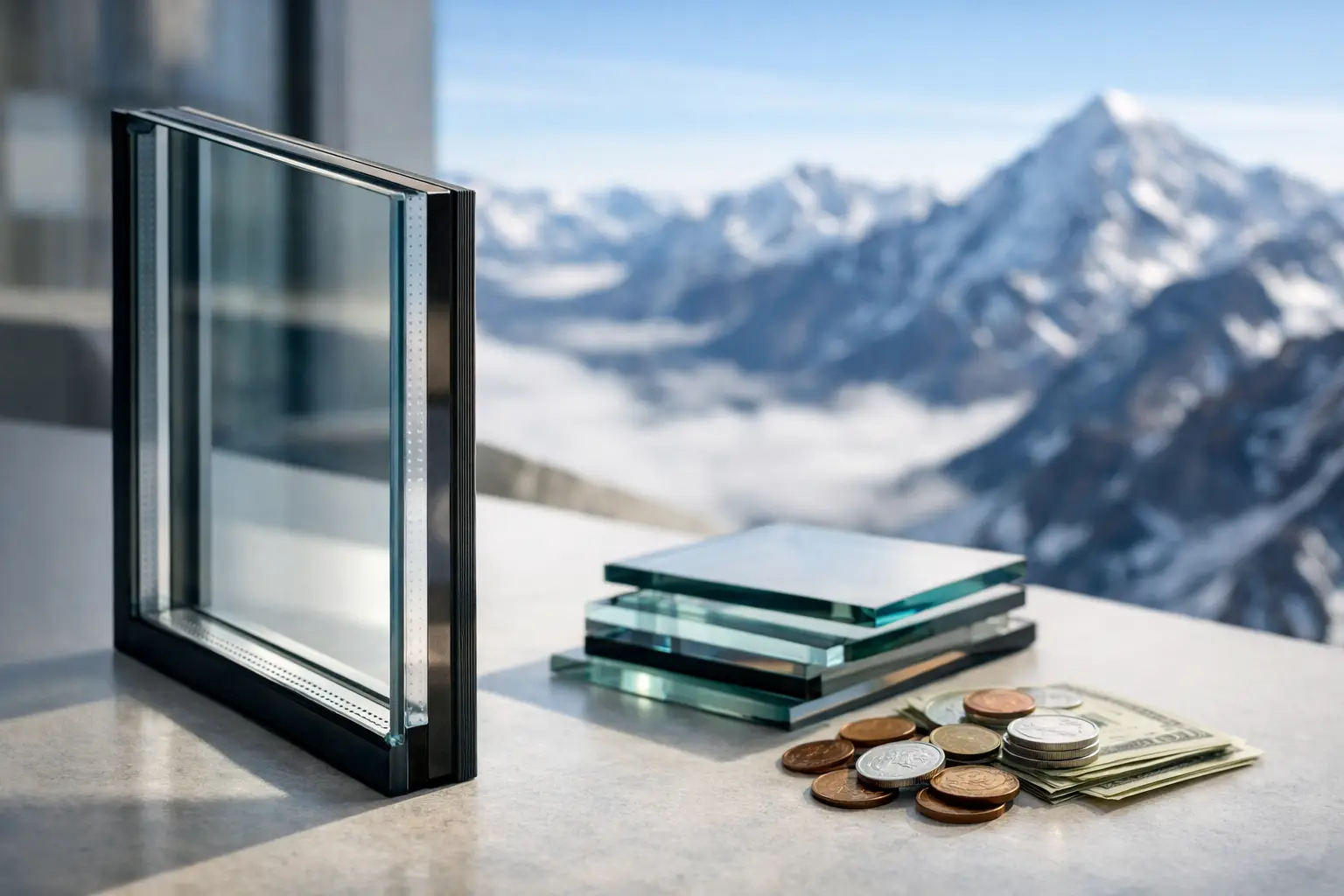
Aluminum is a metal with high inherent strength and a relatively high rate of thermal conductivity. Modern high-performance aluminum systems address that conductivity with a thermal break: an insulating barrier separating the interior and exterior aluminum profiles. The quality, depth, and engineering of that thermal break are central to the frame’s performance.
Fiberglass is a composite material made from glass fibers and resin. It is naturally less conductive than aluminum and expands and contracts at a rate closer to glass. Fiberglass frames can deliver good insulation performance without relying on a thermal break, though the complete window still depends on glazing, seals, frame geometry, and installation quality.
Neither material should be judged by frame material alone. Whole-unit U-factor, solar heat gain coefficient, air infiltration, condensation resistance, glass specification, and structural ratings provide a more meaningful comparison.
Where Thermally Broken Aluminum Has the Advantage
Large openings and slim sightlines
Aluminum’s strength-to-weight ratio supports narrow profiles around large expanses of glass. That matters when an architect is designing oversized fixed windows, tall multi-panel doors, corner conditions, or panoramic openings where frame bulk can interrupt a view.
A well-engineered aluminum system can carry substantial glass weight while maintaining refined sightlines. Fiberglass is strong in its own right, but it generally requires wider frame sections as opening sizes increase. For projects centered on minimal frame expression, aluminum often provides more design freedom.
This is particularly relevant for door systems. Large sliding, pivot, folding, and lift-and-slide configurations place significant loads on frames, tracks, and hardware. Aluminum is the established material for many high-capacity architectural door applications because it can be precisely extruded, reinforced, and engineered for these demands.
Custom geometry and finish control
Aluminum extrusion supports a wide range of profile shapes and system configurations. This gives designers latitude to specify narrow mullions, integrated drainage paths, deep glazing pockets, specialty shapes, and coordinated window and door families.
Its finish options are equally compelling. High-quality powder coating can provide consistent color, durable exterior protection, and a broad palette ranging from restrained dark tones to custom architectural colors. Anodized finishes offer another option where the material’s metallic character is part of the design intent.
Fiberglass is commonly finished with paintable surfaces and can perform well in traditional or transitional applications. Still, aluminum generally offers a more comprehensive platform for custom sizes, large assemblies, and tightly coordinated contemporary elevations.
Long-term dimensional stability
Aluminum does expand and contract with temperature changes, but engineered systems account for movement through profile design, glazing methods, gaskets, and installation details. In properly fabricated and installed assemblies, this movement is controlled without compromising operation or weather sealing.
The material does not rot, swell, or attract insects. Its structural characteristics remain reliable over long service lives, which is valuable in exposed mountain environments where wind, ultraviolet exposure, and temperature variation test every exterior component.
Where Fiberglass May Be the Better Fit
Frame insulation in moderate-size openings
Fiberglass has a natural thermal advantage at the material level. In a comparison of basic frame conductivity, fiberglass transmits less heat than aluminum. For moderate-size windows in projects where maximum frame insulation is the leading priority, a quality fiberglass system may be a logical choice.
That advantage should be evaluated in context. A premium thermally broken aluminum window with high-performance insulated glass can achieve strong whole-window thermal values. It may also better satisfy structural or aesthetic requirements that a fiberglass system cannot meet as cleanly.
A residential appearance with less metal expression
Some homeowners prefer the visual depth and painted character associated with fiberglass frames. Fiberglass can suit residences with more conventional window proportions, divided-light patterns, or a softer frame presence.
For projects where the windows are intentionally quiet rather than visually minimal, fiberglass can offer a balanced combination of durability, paintability, and thermal performance. It is not a lesser material. It is simply optimized for a different set of priorities.
Budget alignment on standard configurations
Pricing varies widely by manufacturer, glass package, hardware, size, and project complexity. In some standard residential configurations, fiberglass may be a more accessible option than a premium thermally broken aluminum system.
The calculation changes quickly when openings become larger, custom colors are required, or the design calls for coordinated window and door systems. Value should be measured against capability, not only the initial unit price. A lower-cost frame that forces compromises in opening size, visible frame width, or door performance can be expensive from a design standpoint.
Thermal Performance Depends on the Complete System
A common mistake is assuming that fiberglass is always energy efficient and aluminum is always thermally weak. That may have been a reasonable shortcut decades ago, before advanced thermal-break technology became standard in high-performance aluminum systems. It is not a sufficient specification method now.
Review the performance data for the actual system and glazing combination. Low-E2 glass, offered as standard in ViewLux Colorado systems, helps manage solar energy while preserving visible light and clear views. The insulated glass unit, spacer, gas fill, coating position, frame thermal break, and edge-of-glass conditions all influence comfort near the window.
In Colorado, solar strategy deserves particular attention. South-facing glass may benefit from carefully selected solar heat gain to support passive warmth during colder months, while west-facing elevations often require more solar control to limit afternoon overheating. The appropriate glass specification can vary by orientation, overhang depth, elevation, and interior comfort goals.
Condensation resistance also deserves more than a passing review. Interior humidity levels, exterior temperature, frame temperature, glass edge performance, and airflow around the window all affect condensation risk. A high-quality thermally broken aluminum frame can perform very well, but it must be paired with appropriate glazing and realistic indoor humidity management.
Structural Performance and Installation Detail
In wind-exposed locations, structural performance is not optional. Frame deflection, glass thickness, mullion design, anchorage, and water-management details should be coordinated early, especially for large fixed glass walls and operable door systems.
Aluminum gives engineers considerable flexibility to address wind loads without making the visible frame disproportionately heavy. This can be decisive in exposed sites, tall openings, and assemblies spanning multiple stories. Fiberglass can meet structural requirements in many applications, but aluminum typically provides a wider range of solutions as dimensions and loads increase.
Installation is equally consequential. Even the strongest window system can underperform when flashing, sill support, drainage planes, insulation continuity, and perimeter sealing are not correctly detailed. The window should be selected as part of the wall assembly, not as an isolated product decision made after framing is complete.
Maintenance, Durability, and Daily Use
Both aluminum and fiberglass require relatively little maintenance compared with wood. Routine cleaning of frames, glass, drainage paths, and hardware will support long-term operation. Operable units should be specified with hardware rated for the panel weight and frequency of use, particularly for oversized doors.
Aluminum’s powder-coated or anodized finish is highly durable when properly specified for the environment. Fiberglass paint finishes can also perform well, with the benefit of potential repainting if a future color change is desired. Coastal corrosion is not a primary concern for most Colorado projects, but ultraviolet exposure and weather cycling remain important finish considerations.
For homeowners, daily experience often comes down to operation. A large window that provides a strong thermal number but feels difficult to open does not deliver a premium result. Hardware quality, sash balance, roller capacity, lock engagement, and fabrication precision deserve the same scrutiny as glass and frame material.
How to Specify the Right Material
Start with the architectural intent. If the project depends on expansive views, exceptionally slim profiles, large operable panels, or a unified window-and-door language, thermally broken aluminum should be central to the evaluation. Its structural capacity and visual precision are difficult to replicate with other materials.
If openings are conventional in size and the strongest possible insulating frame is the primary objective, fiberglass deserves consideration. It can be an effective solution where its proportions, finish options, and system limitations align with the design.
Then compare actual system data rather than generalized claims. Ask for whole-unit thermal ratings, air and water performance, structural limits at the required size, glass options, finish warranties, hardware specifications, and installation requirements. A window is a long-term architectural component. The right choice should hold up under both the climate and the design brief.
The most successful specification is the one that lets the architecture remain uncompromised while giving the building envelope the performance margin it needs for decades of Colorado weather.