Pivot Entry Doors for Modern Homes
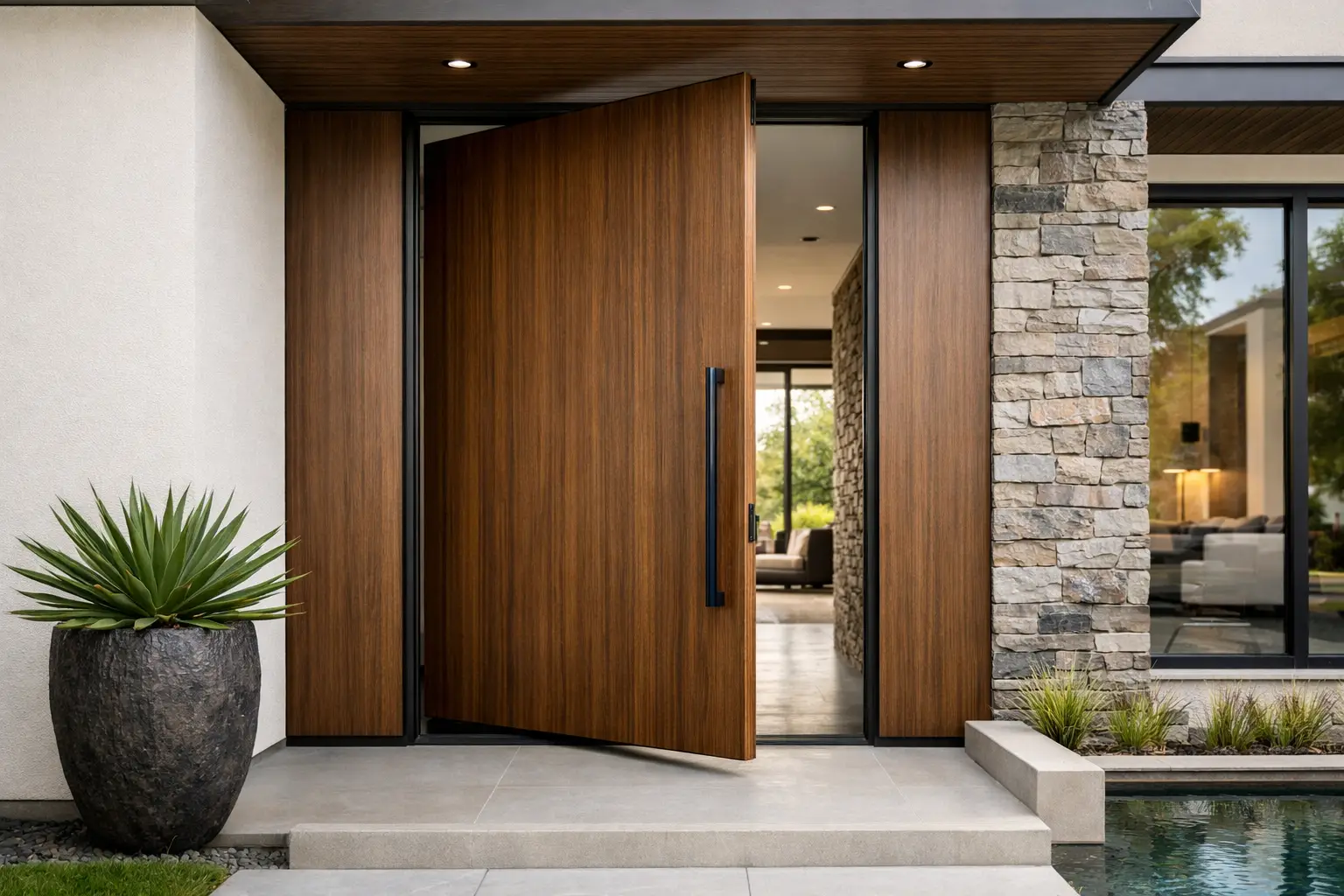
A front door sets the tone for the architecture before anyone steps inside. In high-end residential design, pivot entry doors for modern homes have become a defining choice because they deliver scale, precision, and a distinctly contemporary presence without relying on decorative excess.
What makes the system compelling is not just the visual effect. A well-engineered pivot door can support larger panels, cleaner detailing, and a more controlled opening experience than many conventional hinged doors. For architects, builders, and homeowners working in Colorado and the Rocky Mountain region, that appeal only holds if the door also performs under real climate stress.
Why pivot entry doors modern homes specify stand apart
The difference starts with the hardware geometry. A traditional hinged door rotates on side hinges fixed at the jamb. A pivot door rotates on a pivot set located at the top and bottom of the panel, usually offset from the edge. That shift changes both the engineering and the visual language of the opening.
Because the load transfers differently, pivot systems can accommodate taller and wider door panels with a more composed feel. The door appears to move with weight and control, which suits contemporary architecture where proportion matters as much as finish. The offset pivot also creates a distinctive entry sequence - one portion of the panel swings inward while the opposite edge moves outward, producing a broader and more sculptural opening.
For modern homes, that matters because the front entry is often designed as an architectural plane rather than a decorated threshold. Large-format doors, minimal frames, and flush transitions all work together. A pivot system supports that intent better than a conventional door when the opening is oversized and the design priorities center on clean lines.
Scale, sightlines, and architectural impact
Most clients are drawn to pivot doors for one reason first: presence. The scale is immediate. A tall aluminum-and-glass pivot door can anchor a façade with the same confidence as a corner window wall or a multi-panel slider.
That said, size alone is not the point. Good modern design depends on restraint. The best pivot entry systems use refined sightlines, disciplined frame proportions, and finishes that align with the broader material palette of the home. Dark anodized aluminum, custom powder-coated finishes, and carefully specified glass can make the entry feel integrated rather than overstated.
This is where specification discipline matters. A pivot door that is too thick in profile, too visually busy, or poorly proportioned to the surrounding glazing can look heavy. The right system should read as substantial without becoming blunt. In contemporary mountain architecture, where stone, metal, wood, and glass often meet in crisp compositions, the entry should strengthen the façade, not compete with it.
Glass, opacity, and privacy balance
Modern pivot entry doors are not limited to a single expression. Some projects call for expansive glass to bring daylight into the foyer and reinforce visual continuity with adjacent fixed glazing. Others require more privacy, using insulated opaque panels, narrow vision lites, or textured glass.
The right balance depends on exposure, orientation, and street relationship. A front elevation with direct western sun and close proximity to neighboring homes may benefit from more controlled glazing. A secluded site with a long approach can support a more transparent composition. The pivot format works in both cases, but the panel design needs to respond to site conditions rather than a trend image.
Performance in Colorado is where specification gets serious
A pivot door can look exceptional in a rendering and still fail the project if thermal performance, weather resistance, and structural stability are treated as secondary. Colorado homes face large temperature swings, intense UV exposure, snow, wind, and altitude-related performance demands. Front entries also see repeated daily use, making operational consistency a practical concern, not just a technical note.
Thermally broken aluminum systems are especially relevant here. Without a true thermal break, aluminum frames can transfer exterior temperatures too easily, undermining comfort and energy performance at one of the most visible openings in the building envelope. A properly engineered system helps reduce that transfer while preserving the slim profiles architects want.
Weather management is equally important. Oversized pivot panels require precise sealing strategies, threshold detailing, and hardware integration. The larger the panel, the less tolerance there is for casual specification or installation. Water, air, and thermal movement all have to be addressed at the system level.
That is why premium projects should evaluate more than appearance. Panel size capacity, thermal values, glass package options, finish durability, hardware quality, and tested performance data all deserve attention early in design development.
Where pivot doors work best in modern homes
Not every front elevation needs a pivot door. The system is strongest when the architecture already supports a large, deliberate entry condition.
Single-family custom homes with tall foyer volumes, broad exterior walls, and minimal façade articulation are natural candidates. So are projects where the entry door aligns with major interior axes, long sightlines, or a framed exterior view. In those settings, the door becomes part of the architectural sequence rather than an isolated feature.
They are also effective in remodels, but only when the existing opening, structure, and detailing can accommodate the system properly. Retrofitting a pivot door into a home designed around a standard hinged entry can require more coordination than clients initially expect. Structural support, threshold conditions, and adjacent finish work may all need revision.
When a hinged door may be the better choice
There are cases where a conventional swing door remains the better specification. Smaller openings, tighter budgets, traditional architectural styles, and projects with limited tolerance for custom site coordination may not benefit from a pivot system.
There is also the question of use pattern. Some households prioritize a highly straightforward daily operation at a modest scale over a statement entry. In those cases, a premium hinged system can still deliver strong thermal performance and a refined modern appearance. Pivot doors are not inherently better for every home. They are better when the project calls for scale, precision, and architectural emphasis.
Key specification decisions that shape results
The earliest decisions have the biggest downstream effect. Panel dimensions determine not only visual impact but also hardware demands, structural support, and user feel. A very large door can be impressive, but it needs to open with control and consistency. Oversizing for effect alone rarely improves the final result.
Material and finish selection come next. Aluminum is often preferred in contemporary work for its dimensional stability, slim profiles, and alignment with modern glazing systems. Finish should be coordinated with windows, railings, and other exterior metals so the entry reads as part of a complete envelope strategy.
Glass selection should address solar exposure, privacy, insulation, and safety requirements. Hardware should be evaluated not just for aesthetics but for long-term reliability and adjustment capability. Handle design, closer behavior, lockset integration, and threshold detailing all shape the daily experience of the system.
Installation coordination deserves equal attention. With pivot systems, field accuracy matters. Tolerances at slab, jamb, and head conditions can affect performance and visual alignment. On premium residential projects, the cleanest finished result usually comes from involving the door supplier early, before the opening and surrounding assemblies are finalized.
The value of direct manufacturer coordination
For architects and builders specifying complex modern envelopes, direct access to the manufacturer can reduce friction across design, pricing, and execution. That is especially relevant with pivot systems, where size, engineering, and finish customization often move beyond standard dealer inventory logic.
A factory-direct approach allows project teams to confirm dimensions, performance criteria, configuration options, and detailing earlier in the process. It can also improve alignment between the entry system and the broader window and door package, which matters on homes where sightlines, finish consistency, and thermal performance are expected to work as one coordinated whole.
For firms and homeowners in the Rocky Mountain region, this is one of the reasons companies such as ViewLux Colorado are positioned around custom architectural systems rather than commodity door replacement. The project is rarely about a single panel. It is about how that panel performs within a demanding climate and a highly resolved design language.
What a well-executed pivot entry door delivers
At its best, a pivot door does more than create drama at the front elevation. It solves for scale elegantly. It supports a cleaner façade composition. It gives the entry sequence a sense of weight and calm that standard doors often struggle to achieve in large-format modern architecture.
But the strongest results come from restraint and rigor. The door should be sized to the architecture, detailed for the climate, and engineered for repeated use. When those pieces are aligned, a pivot entry becomes one of the clearest expressions of contemporary residential design - not because it is trendy, but because it is precise.
For modern homes in Colorado, that precision is what separates a striking opening from a successful one.