Energy Efficient Aluminum Doors Explained
A large glass door can make a room feel expansive and precise - or expose every weakness in the building envelope. That tension is exactly why energy efficient aluminum doors matter. In high-altitude and four-season climates, the right door system is not just a design decision. It affects comfort at the threshold, HVAC demand, condensation risk, and whether a clean modern facade performs as well as it looks.
What makes aluminum doors energy efficient
Aluminum has long been valued for strength, narrow sightlines, and its ability to support large panels with clean geometry. On its own, though, aluminum is highly conductive. If the frame is not engineered correctly, interior heat moves outward in winter, outdoor heat moves inward in summer, and the frame itself can become the weak point.
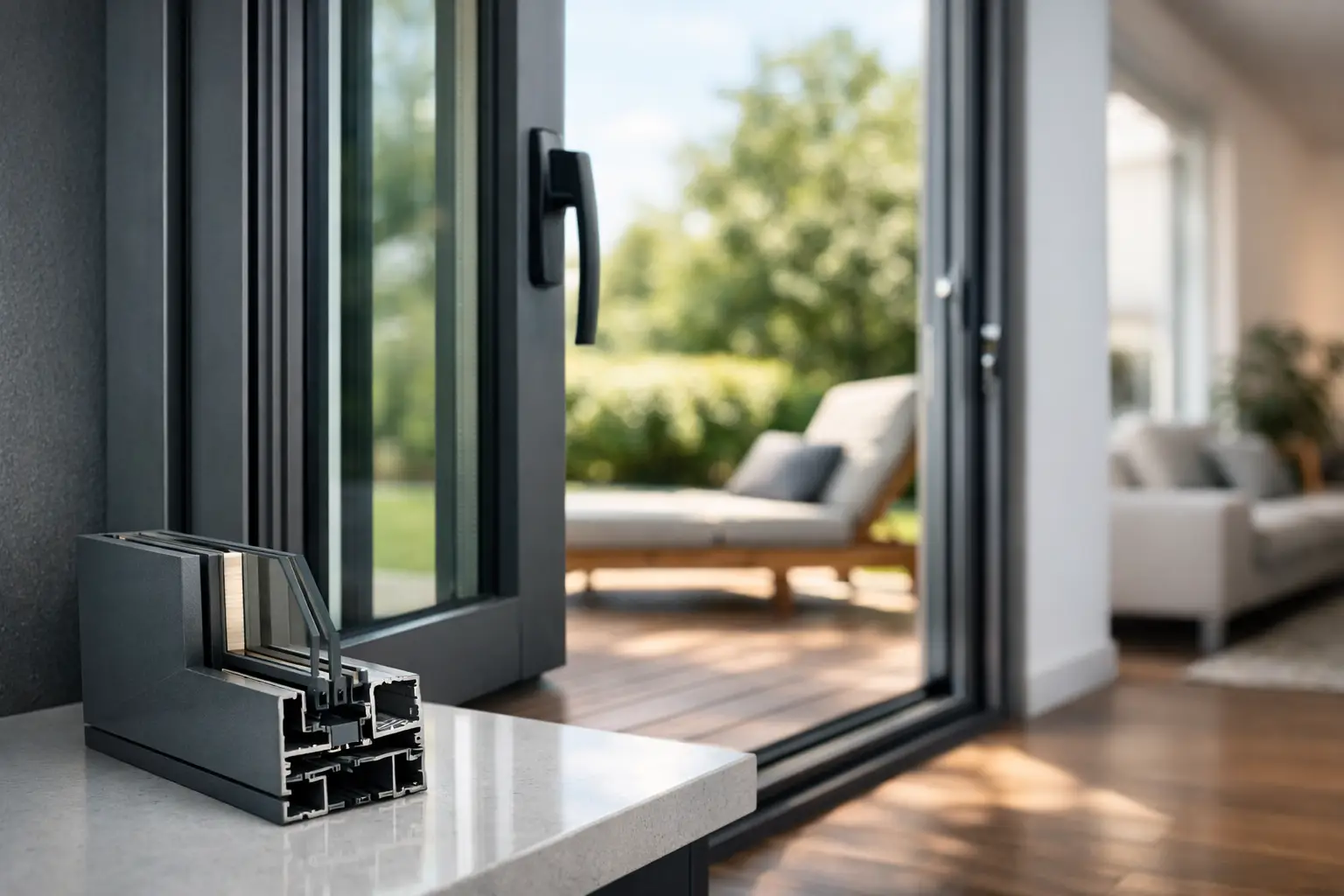
That is why truly energy efficient aluminum doors rely on thermal separation rather than raw material alone. The critical feature is a thermally broken frame, where interior and exterior aluminum sections are separated by a low-conductivity barrier. This interruption reduces heat transfer through the frame and helps stabilize interior surface temperatures.
Glass specification matters just as much. A well-designed aluminum door system typically pairs the thermally broken frame with insulated glazing, quality spacers, and low-emissivity coatings. When tempered Low-E2 glass is standard, the system begins from a stronger thermal baseline rather than treating performance as an upgrade. Hardware, weatherstripping, compression at seals, and frame-to-wall integration all influence the final result.
In other words, energy performance is never about a single feature. It is the combined behavior of frame, glass, seals, hardware, and installation.
Why frame design matters more than most buyers expect
Architects and builders often focus first on visible outcomes - panel size, stile width, corner conditions, threshold detail, finish. Those choices are legitimate, but frame design deserves equal scrutiny because it directly affects the thermal profile of the opening.
Not all thermal breaks are equivalent. The width of the polyamide barrier, the geometry of the profile, the chamber design, and the way the sash interfaces with the frame all influence U-factor and condensation resistance. Two aluminum doors can look nearly identical in elevation while performing very differently once temperatures swing.
This is especially relevant in mountain and high-plains environments where daytime solar gain can be substantial and nighttime temperatures can drop quickly. A refined profile has to do two things at once - maintain slim sightlines and resist energy loss. That balance is a real engineering exercise, not a marketing phrase.
Glass area, views, and the performance trade-off
Large openings are often the reason aluminum is specified in the first place. It can carry bigger glass panels with less visual weight than many alternative materials. For contemporary homes, that structural efficiency is what makes panoramic sliders, oversized pivot doors, and expansive swing systems possible.
But more glass changes the performance equation. Even with advanced coatings, glass generally insulates less effectively than an opaque wall. The goal is not to pretend otherwise. The goal is to choose a door system where frame design and glazing work together well enough that the opening supports the architecture without becoming a comfort liability.
Orientation matters here. A west-facing multi-panel door in a high-sun exposure may require a different glazing strategy than a shaded north-facing opening. In some projects, the highest-performing option is not the one with the absolute largest panel size. It may be a slightly different configuration that improves air tightness, panel weight management, and seasonal comfort while preserving the design intent.
That is where specification discipline pays off. Good design does not mean ignoring trade-offs. It means making them deliberately.
Types of energy efficient aluminum doors
Sliding systems
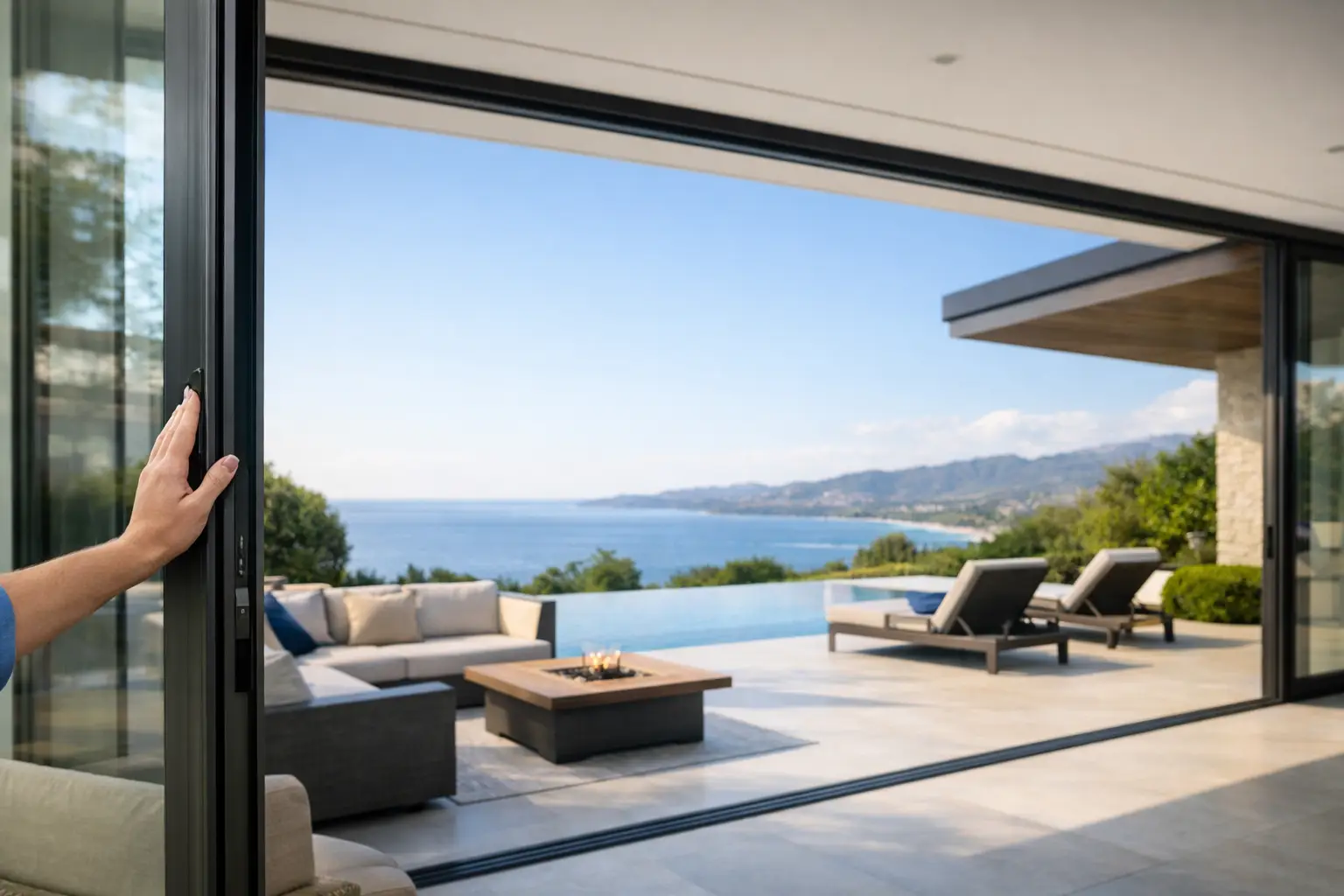
Sliding aluminum doors are often selected for wide openings and direct indoor-outdoor connection. Their performance depends heavily on interlock design, gasket quality, track engineering, and how tightly the panels close. The best systems maintain slender profiles without sacrificing weather resistance. They are ideal when the design calls for broad glass spans and unobstructed views, but the panel and track details need careful review in exposed conditions.
Swing and French doors
Swing doors typically offer strong compression sealing because the panel closes against weatherstripping with consistent pressure. That can make them an excellent choice where air infiltration control is a top priority. French configurations preserve symmetry and openness, though meeting stiles and threshold design should still be evaluated closely.
Pivot doors
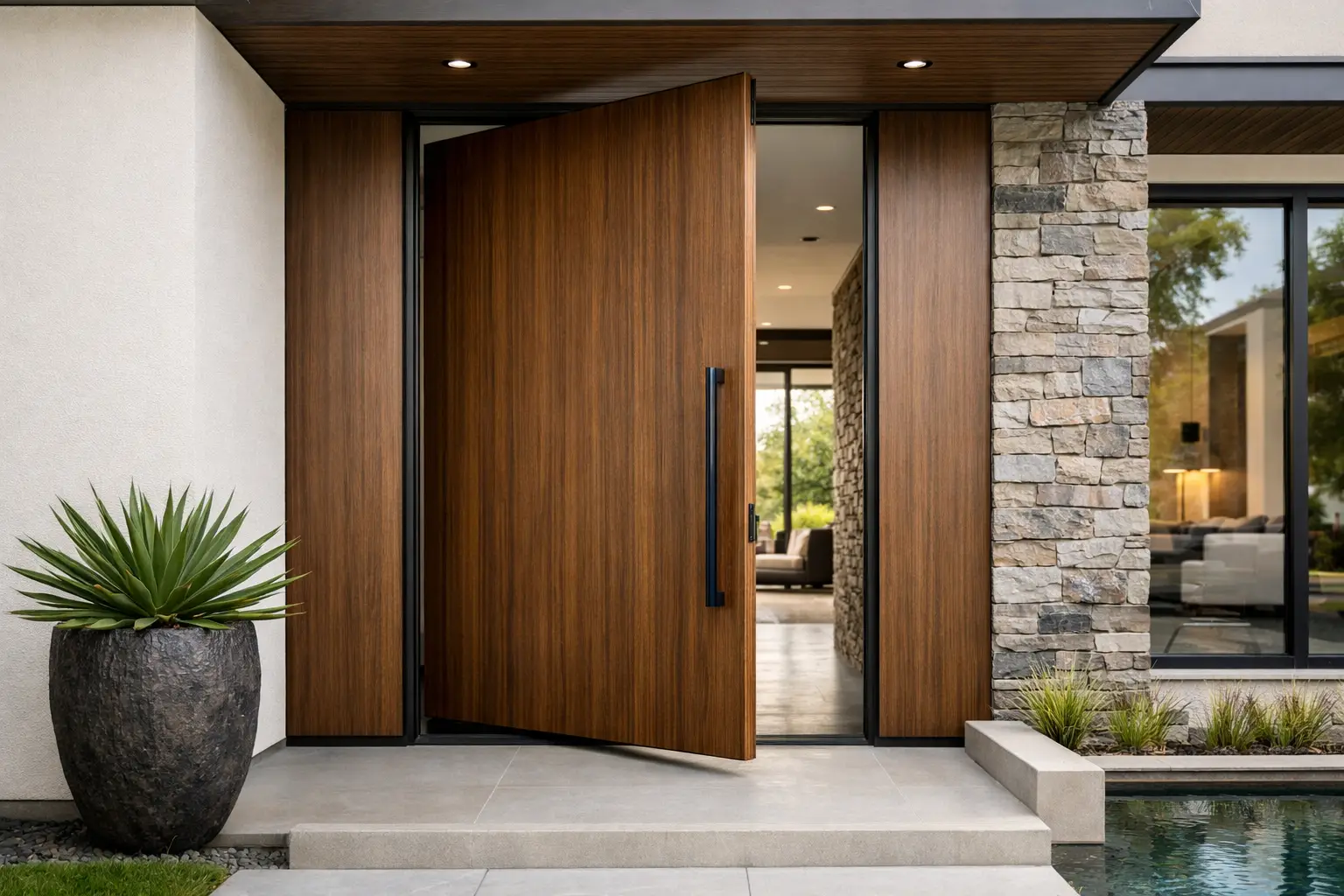
Pivot aluminum doors create a distinct architectural statement and allow for oversized entries with impressive scale. Their performance depends on engineering discipline because the aesthetic often prioritizes size, weight, and minimal visual interruption. A well-designed pivot system can perform very well, but it should be specified with attention to perimeter seals, sill conditions, and expected exposure.
Bifold systems
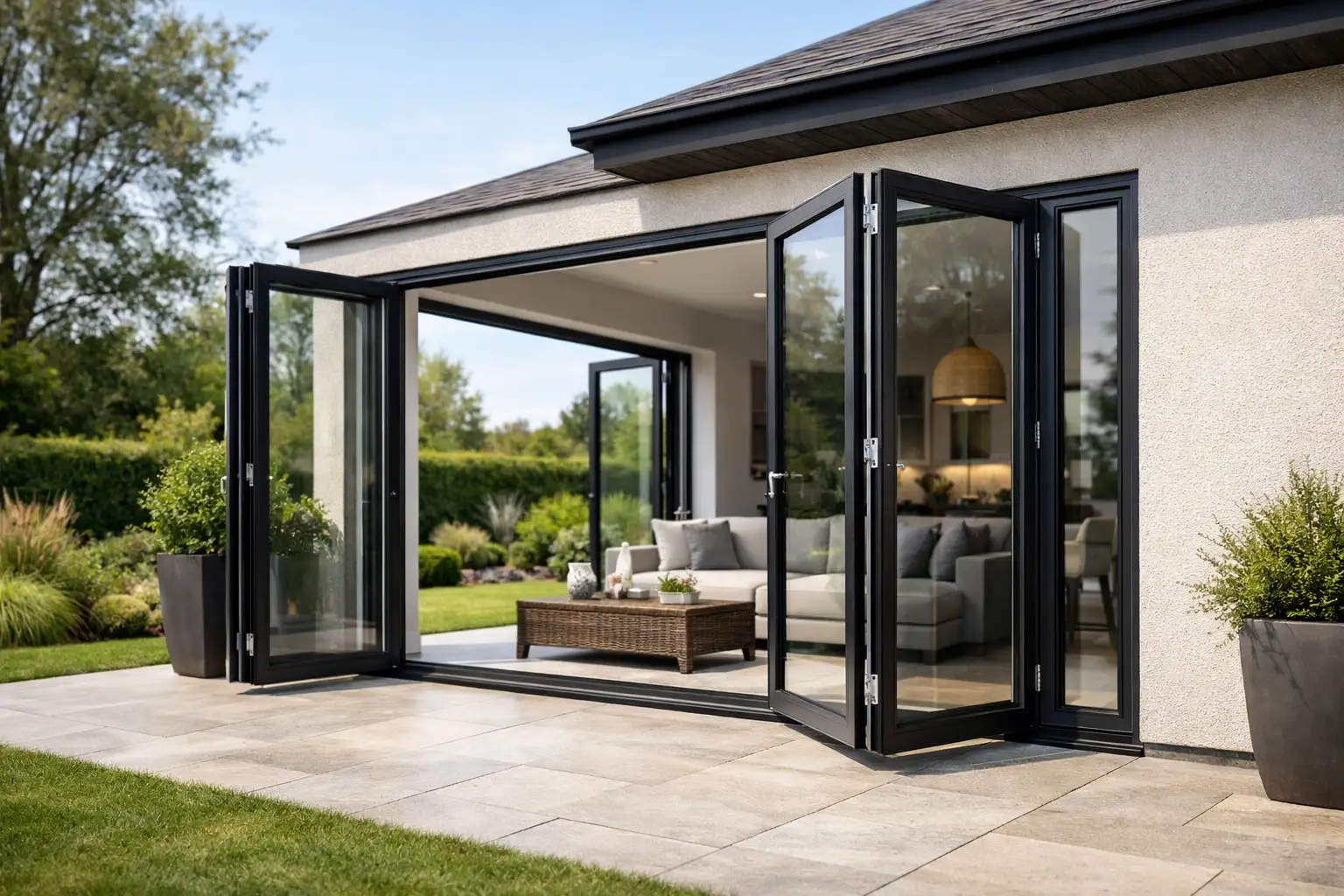
Bifolds offer large clear openings and a strong indoor-outdoor effect, but they involve more panel joints and more moving parts. That does not disqualify them from high-performance projects. It simply means the system quality, alignment, and installation tolerances become even more important.
What to look for in energy efficient aluminum doors
For premium residential work, it helps to think beyond the brochure headline. Ask how the door behaves as a complete assembly. Verified thermal metrics matter, but so do the details that shape real-world performance over time.
A strong specification usually includes thermally broken profiles, insulated glass with low-e coatings, durable gaskets, and high-grade hardware that holds adjustment under repeated use. Multi-point locking can improve compression and sealing. Threshold design deserves close attention because it affects accessibility, water management, and the transition between interior flooring and exterior surfaces.
Finish quality also matters more than it first appears. In demanding sun, snow, and freeze-thaw exposure, the coating has to retain appearance and resist degradation. Premium buyers are not only purchasing thermal performance. They are purchasing visual consistency over years of weathering.
Installation is part of the product
An excellent door can underperform if the rough opening, flashing strategy, insulation, and perimeter sealing are handled poorly. This is particularly true with large-format aluminum systems, where weight, alignment, and structural support all affect long-term operation.
Air and water performance depend on the interface between the frame and the building envelope just as much as they depend on the factory assembly. That means installers need clear tolerances, proper shimming, coordinated sill support, and a drainage strategy that fits the wall system. In custom homes, the more ambitious the opening, the less room there is for improvisation in the field.
For architects and builders, this is one reason direct manufacturer coordination can be valuable. It tightens communication between design intent, fabrication, and site conditions. It also reduces the disconnect that often happens when specification, sales, and installation guidance pass through too many layers.
Why aluminum is still the right choice for many high-performance homes
There is a persistent assumption that aluminum and energy efficiency are somehow at odds. That view is outdated. Poorly engineered aluminum can underperform, certainly. Well-engineered thermally broken aluminum can deliver excellent results while offering advantages other materials struggle to match.
Those advantages include structural rigidity, refined sightlines, dimensional stability, and the ability to execute large and specialized openings with a crisp architectural profile. For contemporary homes, that combination is often non-negotiable. The question is not whether aluminum can perform. The question is whether the system was designed for real climate demands instead of mild-condition assumptions.
In Colorado and similar regions, that distinction matters. Extreme temperature swings, strong UV exposure, snow, wind, and elevation put every weak detail under pressure. A door that looks elegant on paper has to prove itself at the frame edge, at the sill, and at the glass line.
For design teams and homeowners evaluating premium systems, the best approach is straightforward. Start with the architecture, but do not stop there. Review the thermal break, the glazing package, the air and water performance, the hardware, and the installation path with the same level of care. That is how energy efficient aluminum doors deliver what they promise - quiet interiors, stable comfort, and modern openings that feel as precise in January as they do in July.
The right door should never force a choice between clean design and credible performance. In a well-resolved project, you get both.