Aluminum vs Vinyl Windows: Which Fits Best?
A narrow frame can change the entire character of a facade. So can a warped sash in winter, a bulky profile that cuts into the view, or a window system that performs well on paper but struggles through real seasonal swings. When clients ask about aluminum vs vinyl windows, the right answer is rarely just about price. It is about structure, thermal engineering, aesthetics, and how the window will behave over time in the conditions it actually faces.
For custom homes, modern renovations, and architect-driven projects, material selection shapes more than appearance. It affects glazing capacity, frame stability, air and water performance, finish longevity, and the scale of openings the design can support. Vinyl can be a practical solution in many standard residential applications. Aluminum, particularly when thermally broken and properly engineered, belongs in a different performance conversation.
Aluminum vs Vinyl Windows: The Core Difference
The most useful way to compare these systems is not to treat them as interchangeable products with different price tags. They are distinct materials with different strengths and limitations.
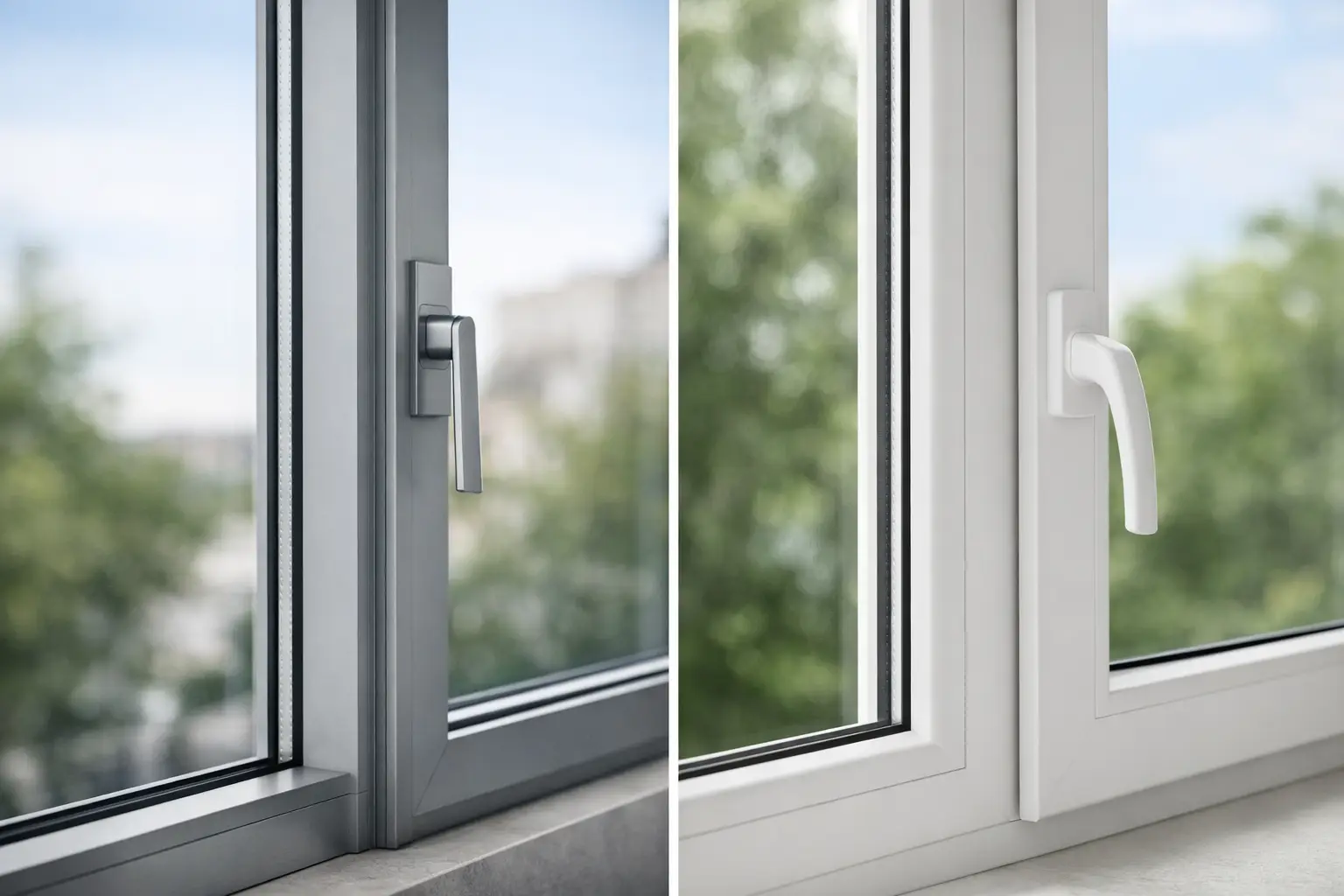
Vinyl windows use extruded PVC frames, often with internal chambers intended to improve insulation. They are common in replacement work and production housing because they are cost-effective, relatively low maintenance, and familiar to most installers. Their thermal performance can be strong in smaller, standard-size formats, especially when paired with quality insulated glass.
Aluminum windows rely on a metal frame with much higher structural strength. In older, non-thermally broken systems, that strength came with a thermal penalty because metal readily conducts heat and cold. Modern thermally broken aluminum changes that equation. By separating the interior and exterior portions of the frame with an insulating barrier, these systems substantially improve thermal performance while preserving the strength, dimensional stability, and refined sightlines that make aluminum attractive in the first place.
That distinction matters. Comparing basic vinyl to advanced thermally broken aluminum is not just a material comparison. It is a comparison of design capability, engineering sophistication, and long-term architectural value.
Where Vinyl Windows Make Sense
Vinyl has earned its place in the market for a reason. In straightforward residential applications, it can offer a solid balance of cost and energy efficiency.
If the project calls for standard openings, conventional styling, and a tighter budget, vinyl may align well with the brief. It does not require painting, resists moisture, and performs reliably when the frame dimensions remain moderate. For homeowners replacing builder-grade windows with a similar configuration, vinyl can be a practical upgrade.
The trade-off is that vinyl has material limits. It is not as rigid as aluminum, which means larger units often require heavier frames, more visible reinforcement, or more conservative dimensions. In climates with intense sun exposure and wide temperature variation, expansion and contraction also deserve attention. Quality manufacturing helps, but PVC remains more susceptible to movement than aluminum.
This is where specification matters. Vinyl is often strongest when expectations are realistic: standard sizes, conventional proportions, and projects where budget sensitivity outranks structural elegance.
Why Aluminum Often Wins in Architectural Projects
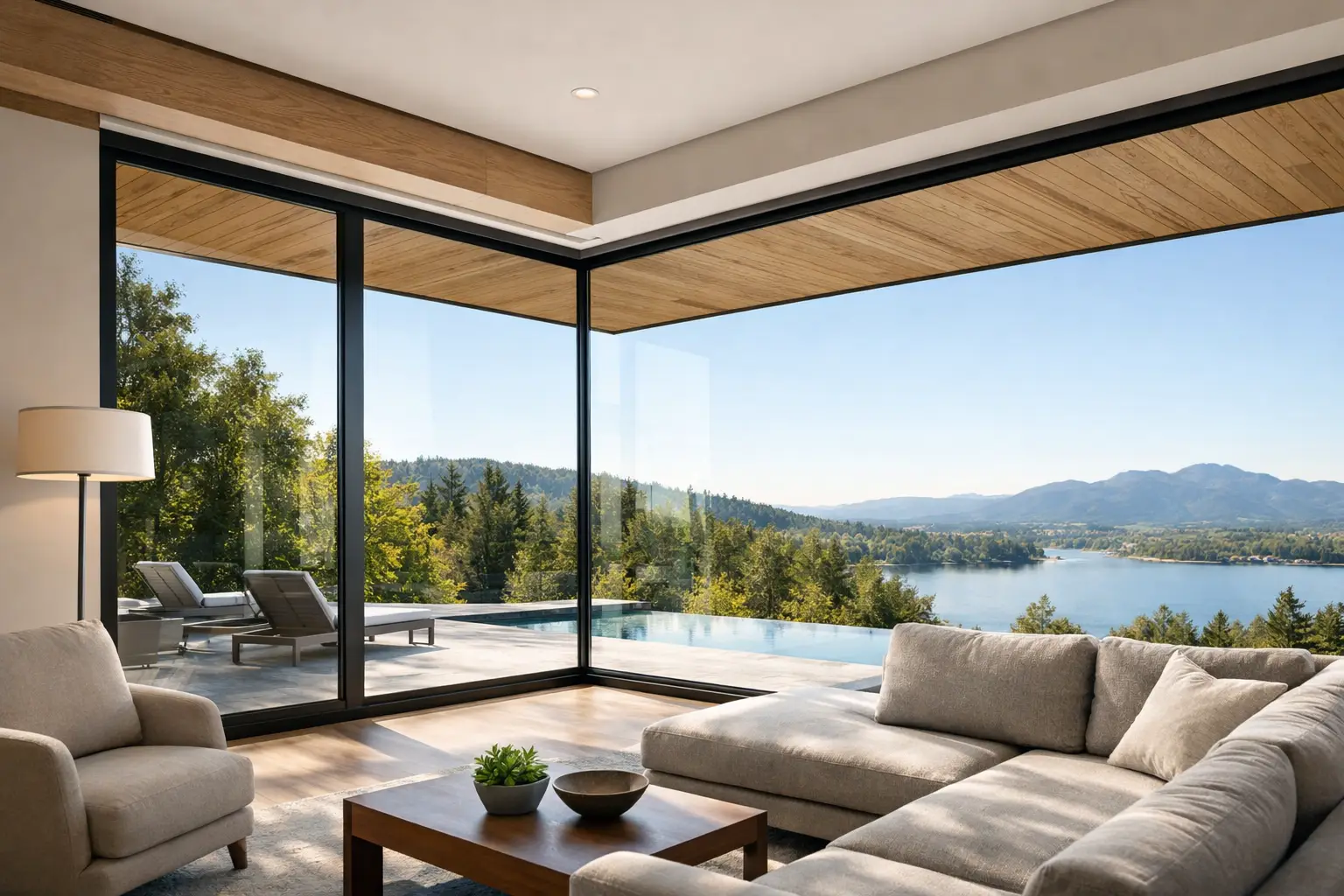
For design-led residential work, aluminum tends to open possibilities that vinyl struggles to support. The immediate advantage is structural strength. Aluminum carries larger panes of glass with slimmer frame dimensions, which allows for cleaner elevations, more daylight, and better view preservation.
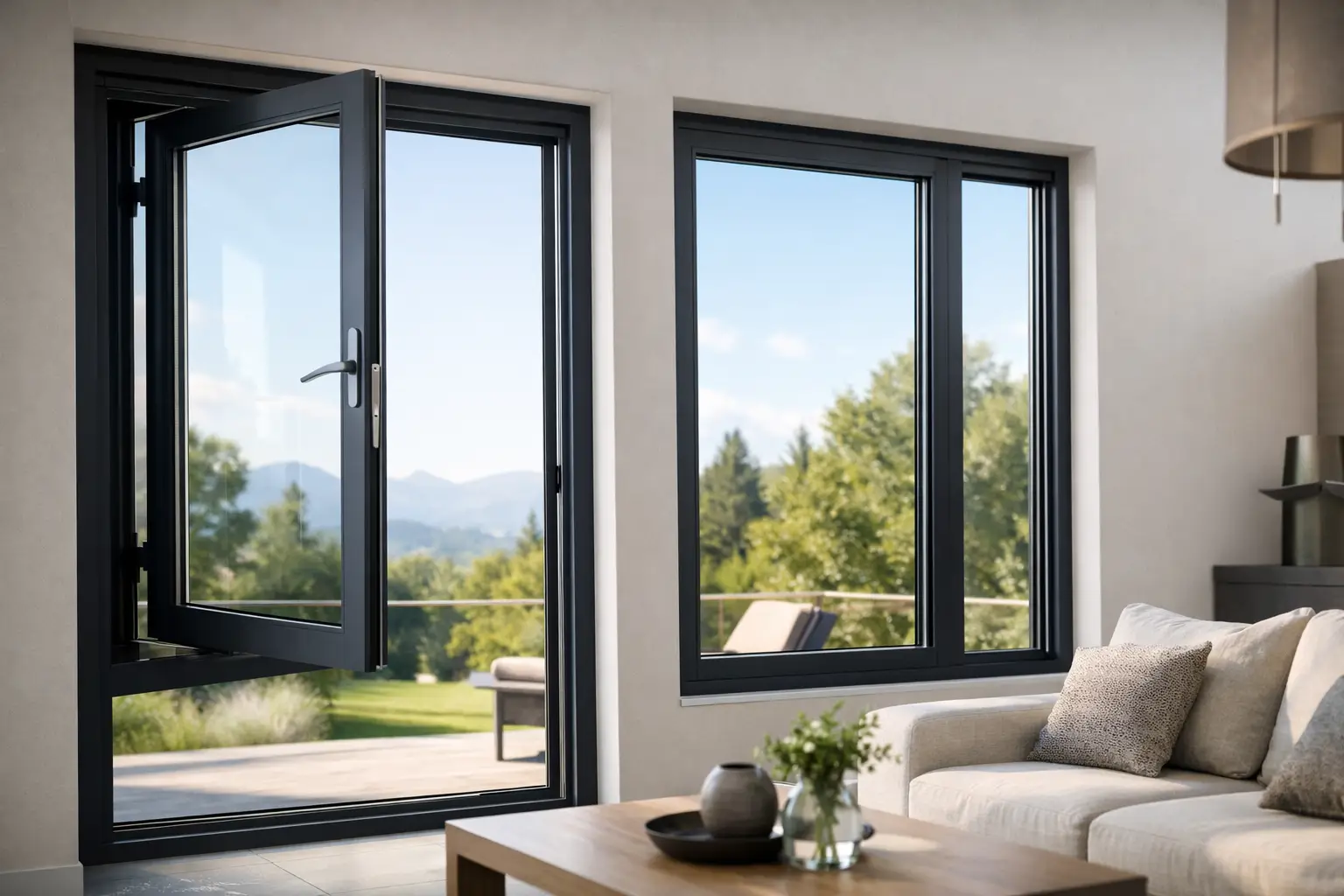
That visual refinement is not cosmetic trivia. Sightlines affect the reading of the entire building envelope. A slim casement or fixed frame can make glazing feel integrated into the architecture rather than inserted into it. On contemporary homes, where restraint and proportion matter, that difference is obvious.
Strength also matters operationally. Larger moving panels, corner conditions, specialty shapes, and expansive window walls all place higher demands on the frame. Aluminum handles those demands with more confidence. The result is better alignment over time, more precise hardware integration, and fewer compromises when the design intent pushes beyond standard residential dimensions.
For architects and builders working in Colorado and similar mountain climates, another factor comes into play: durability under seasonal stress. Freeze-thaw cycles, high UV exposure, snow, altitude, and major day-to-night temperature swings can punish poorly engineered systems. Thermally broken aluminum is particularly well suited to these conditions because it combines dimensional stability with advanced glazing and weather performance.
Thermal Performance Is More Nuanced Than It Looks
The usual assumption is simple: vinyl insulates better, aluminum conducts more, so vinyl wins on energy efficiency. That is too broad to be useful.
A low-end aluminum frame without a thermal break will generally underperform compared with a well-made vinyl frame. That much is true. But a premium thermally broken aluminum system with high-performance glass, quality seals, and careful fabrication can deliver excellent whole-window performance. In some projects, it becomes the better real-world solution because the frame remains stable, the gaskets stay aligned, and the larger insulated glass package can be supported without bulky compromises.
Whole-window performance matters more than material stereotypes. U-factor, solar heat gain coefficient, air infiltration, condensation resistance, spacer technology, and glazing specification all shape how a window performs in the field. A frame material cannot be judged in isolation.
This is especially relevant in the Rocky Mountain region, where heating demand, solar gain, and elevation-driven climate exposure can all influence the ideal specification. A project with expansive glass, strong views, and exacting architectural requirements may benefit more from a thermally broken aluminum system engineered as a complete assembly than from a thicker vinyl unit chosen purely for material reputation.
Durability, Finish, and Long-Term Stability
Windows are not replaced because of one bad month. They are replaced because years of movement, seal fatigue, finish wear, or operational decline finally become too obvious to ignore.
Vinyl resists rot and does not need repainting, which is a genuine advantage. But the material can discolor over time, particularly in harsher UV environments, and frame movement may become more noticeable in large or dark-colored units. Welded corners, thicker profiles, and limited finish options can also constrain the visual result.
Aluminum offers a different durability profile. It does not swell, twist, or soften in the same way under heat exposure. Factory-applied finishes can be highly refined and consistent, and the material supports a more premium range of colors and surface treatments. For projects where the window package is part of the architectural expression, that finish quality carries weight.
Long-term stability also affects serviceability. Hardware performs better when the frame remains true. Large operable units depend on rigidity. Precise alignment is not a luxury feature. It is central to weather resistance, ease of operation, and lifespan.
Cost Depends on What You Are Buying
If the comparison is based strictly on upfront cost, vinyl usually enters lower. That is one reason it remains widespread.
But initial purchase price is only one layer of value. If the project requires oversized openings, narrow profiles, custom geometries, premium finishes, or stronger structural performance, the relevant question is not whether vinyl is cheaper. It is whether vinyl can actually deliver the required result without visual or technical compromise.
In many high-end homes, it cannot. The design starts asking more of the frame than vinyl is comfortable giving. At that point, aluminum is not an upgrade for its own sake. It is the material that fits the brief.
There is also the issue of procurement. Direct manufacturer relationships can shift the economics of premium systems in a meaningful way, especially when project teams want better pricing control, more accurate specification support, and fewer layers between design intent and final product.
How to Choose Between Aluminum vs Vinyl Windows
The right choice comes down to project priorities.
If the home is budget-driven, the openings are conventional, and the visual language is less dependent on minimal framing, vinyl may be the appropriate answer. It can perform well, particularly in standard residential formats, and it remains a reasonable choice for many replacement and entry-level new construction projects.
If the design depends on larger spans of glass, refined proportions, dark or custom finishes, and stronger frame stability, aluminum becomes much more compelling. If the site faces major climate variation, heavy sun exposure, or high-performance demands, thermally broken aluminum deserves serious consideration. And if the window package must support an architectural vision rather than simply fill an opening, aluminum usually provides more room to design well.
That is why premium manufacturers such as ViewLux Colorado focus on thermally broken aluminum systems with advanced glass packages, slim sightlines, and project-specific customization. In the right application, the material is not just stronger. It is more aligned with the way high-performance residential architecture is now being designed.
The better question is not which material wins in the abstract. It is which system matches the scale, climate, and design ambition of the project in front of you. Choose the window that still looks right, performs correctly, and operates precisely long after the finish selections are forgotten.