What Are Thermally Broken Doors?
A large aluminum door can look exacting and architectural on paper, then become the weak point of the envelope once winter sets in. That is usually where the question starts: what are thermally broken doors, and why do they matter so much in a climate with wide temperature swings?
At the simplest level, a thermally broken door is an aluminum door system engineered with a non-conductive barrier between the interior and exterior sections of the frame and sash. That barrier interrupts the natural flow of heat through the metal. The result is a door that keeps aluminum’s structural strength and refined sightlines while performing far better in cold, hot, and mixed climates.
For architects, builders, and informed homeowners, this is not a minor technical distinction. It affects energy use, interior comfort, condensation risk, hardware longevity, and whether a large-opening system feels premium in daily use instead of visually impressive but thermally compromised.
What are thermally broken doors doing differently?
Aluminum is prized for its strength, dimensional stability, and ability to support slim profiles and expansive glass. It is also highly conductive. In a standard non-thermally-broken aluminum frame, exterior temperatures travel through the metal with very little resistance. On a cold day, that can pull interior surface temperatures down quickly. On a hot day, it can bring solar heat inward.
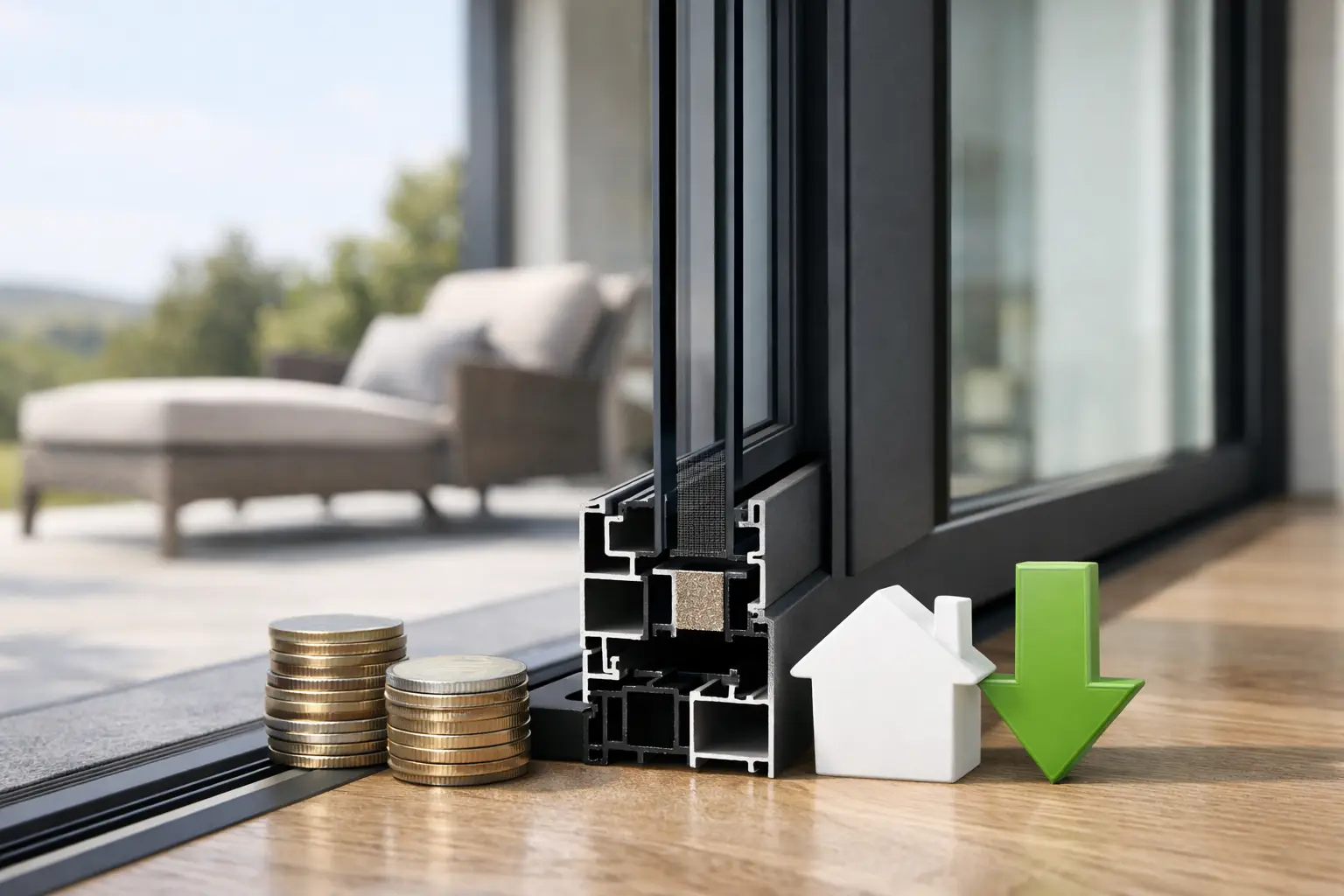
A thermal break changes that behavior. The interior aluminum profile and the exterior aluminum profile are separated by an insulating material, typically a polyamide strip or similar high-performance barrier. Rather than one continuous piece of metal connecting indoors to outdoors, the system is split into two sections with a low-conductivity zone between them.
That interruption is the whole point. It slows heat transfer, improves the overall U-value of the assembly, and helps the inside surface of the frame stay closer to room temperature. In practical terms, the door feels more stable, more comfortable, and more appropriate for high-performance residential construction.
Why the thermal break matters in real buildings
The phrase can sound technical, but the impact is easy to understand once the door is installed. A thermally broken door helps control three things that owners notice immediately: temperature, condensation, and consistency.
First, it reduces unwanted heat movement through the frame. Glass often gets most of the attention in energy discussions, but the frame is part of the equation. If the frame conducts aggressively, the whole assembly underperforms.
Second, it lowers condensation risk. When warm indoor air meets a very cold interior metal surface, moisture can condense. That can lead to water at the frame, discomfort near the opening, and long-term damage to adjacent finishes if the issue is repeated. A thermally broken frame keeps interior surfaces warmer and makes that condition less likely.
Third, it creates a more even experience at the threshold and perimeter of the opening. Occupants may not describe it in technical terms, but they notice drafts, cold radiation, and the sense that a large glazed opening is not as usable in winter as it should be. Better thermal separation improves that experience.
In mountain and high-plains environments, where daytime and nighttime temperatures can swing sharply and solar exposure is intense, those gains are not theoretical. They are part of whether a door system is truly engineered for place.
How thermally broken doors are built
The construction varies by manufacturer, but the fundamentals are consistent. The system starts with separate interior and exterior aluminum components. Those components are mechanically connected by the thermal barrier, which becomes an integral part of the profile.
From there, performance depends on the full assembly, not just the existence of a break. Profile depth, gasket design, glazing pocket geometry, multi-point locking, threshold detailing, weather seals, and the glass specification all influence the finished result.
That is why two products can both be described as thermally broken and still perform very differently. A minimal thermal barrier in a lightly engineered frame is not the same as a fully developed system designed for larger sizes, demanding exposures, and stricter performance targets.
Glass specification matters as well. Insulated glazing with tempered Low-E2 glass as standard strengthens the thermal package, but the frame still has to support that glazing with compatible thermal detailing. High-performance glass in a weak frame only solves part of the problem.
What are thermally broken doors best used for?
They are especially well suited to projects where aluminum is chosen for its clean aesthetics and structural capability, but envelope performance cannot be compromised. That includes large sliding doors, pivot doors, swing doors, French doors, bifold systems, and panoramic openings where slim sightlines are part of the architectural intent.
In luxury residential work, the value becomes even clearer. These homes often prioritize larger expanses of glass, flush transitions, and exacting detailing. That raises the bar for the door system. A heavy panel with substantial glazing needs strength, precise hardware integration, and protection against thermal bridging.
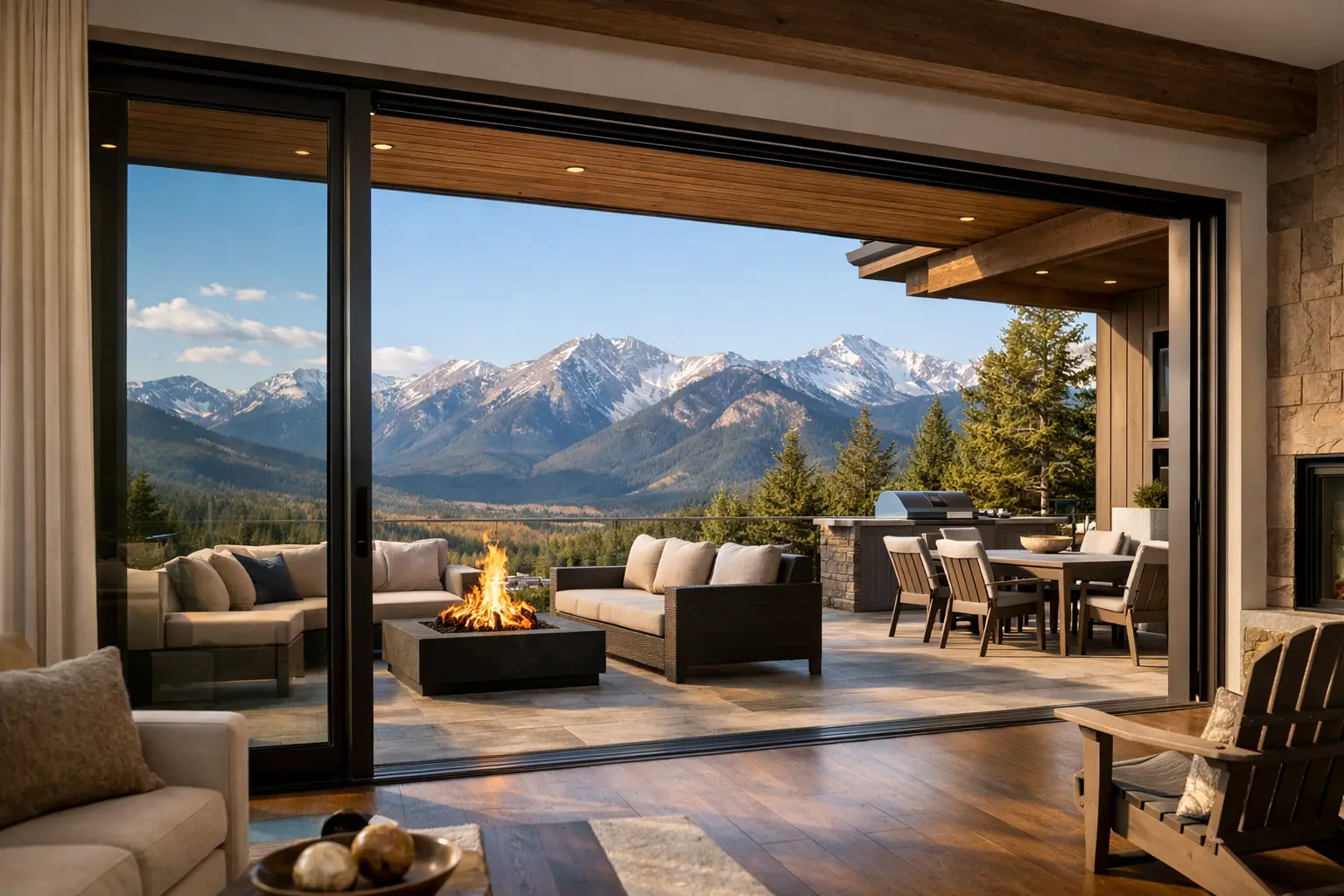
For contemporary mountain homes, the challenge is usually not just cold weather. It is cold weather, strong sun, elevation, wind exposure, and shoulder-season variation all working at once. Thermally broken aluminum is often the right material response because it preserves the visual discipline of aluminum without accepting the performance penalties of older, non-insulated frames.
The trade-offs to understand
Thermally broken doors are not simply a premium add-on. They are a better-performing category of product, but there are still trade-offs worth acknowledging.
They generally cost more than non-thermally-broken aluminum systems because the profiles are more complex to manufacture and engineer. For budget-driven projects in mild climates, some owners may be tempted to reduce that specification. Whether that is sensible depends on the opening size, orientation, climate exposure, and the performance goals of the home.
They also require proper installation. Even a high-performing frame can be undermined by poor perimeter sealing, weak flashing strategy, or threshold conditions that ignore water management and air control. A thermally broken door should be viewed as one part of a complete envelope detail, not a standalone fix.
And while thermal breaks significantly improve performance, they do not turn aluminum into a different material altogether. Fiberglass, wood-clad, and other frame types may outperform some aluminum systems in certain thermal metrics. The reason thermally broken aluminum remains compelling is that it balances performance with structural capacity, finish durability, and refined profiles in a way few materials can match.
How to evaluate a thermally broken door system
If you are specifying or sourcing one, start with tested performance rather than broad claims. Ask for the thermal values of the complete assembly, not just center-of-glass data. U-value, air infiltration, water resistance, and structural performance should all be considered together.
Then look closely at the profile design. The quality of the thermal barrier, the depth of the system, the sophistication of the seals, and the hardware package all shape long-term performance. This is particularly relevant for oversized sliding or pivot configurations, where panel weight and repeated use place greater demands on the system.
It is also worth reviewing how the sightlines align with the architecture. The best systems do not force a choice between performance and proportion. They deliver both, which is why architect-focused manufacturers put so much development into profile refinement and engineering discipline.
For Rocky Mountain projects, climate suitability should be part of the conversation early. Not every imported or commodity aluminum system is developed for those conditions. The door may look comparable in a showroom but behave very differently after a season of real exposure.
Why this category has become the standard in premium aluminum design
The market has shifted because expectations have shifted. Clients want larger openings, quieter interiors, stronger energy performance, and cleaner detailing. Builders want fewer callbacks related to condensation and comfort. Architects want aluminum systems that support ambitious glazing without visually heavy frames.
That combination has made thermally broken construction less of a specialty feature and more of a baseline requirement for serious residential and architectural work. At the premium end of the market, it is often the only credible way to specify aluminum doors for demanding climates.
ViewLux Colorado focuses on this category for that reason. The goal is not simply to offer aluminum doors, but to offer thermally broken systems with the structural integrity, customization range, and design precision required for modern residential architecture.
The right question is not whether a thermal break sounds advanced. It is whether the door is engineered to perform as convincingly as it looks once the weather turns, the glass gets bigger, and the opening becomes part of daily life.