Colorado Luxury Patio Doors That Perform
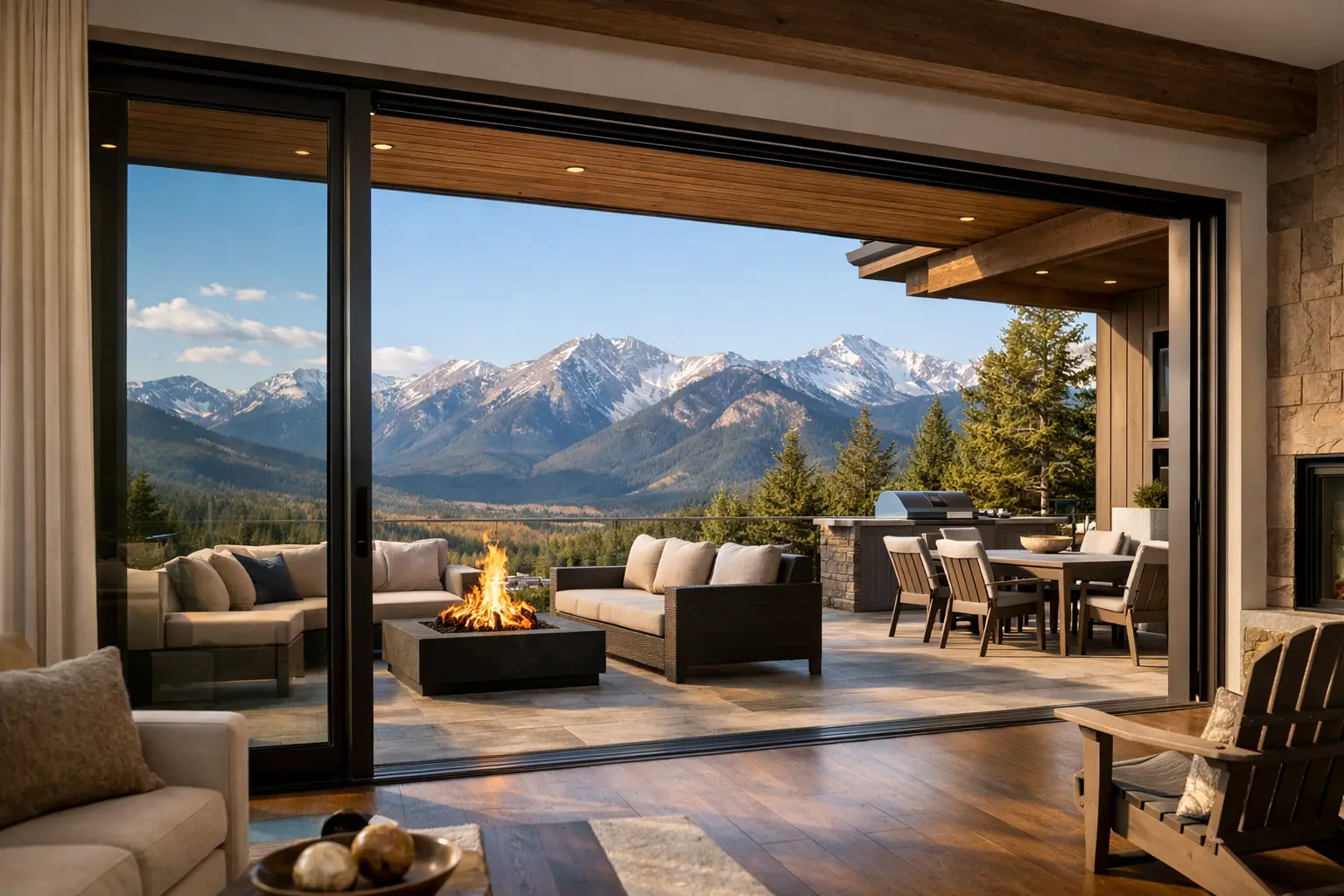
A 12-foot glass opening looks effortless on paper. In a Colorado build, it has to handle snow load, sharp UV exposure, high altitude sun, winter cold, summer heat, and the daily expectation that it will glide, seal, and align like a precision component. That is the real standard for Colorado luxury patio doors - not just visual impact, but performance under pressure.
For architects, builders, and homeowners specifying at the upper end of the market, patio doors are no longer a secondary package item. They shape the facade, define indoor-outdoor circulation, and often carry the largest uninterrupted glass areas in the home. When the door system underperforms, the issues are immediate: frame expansion and contraction, air infiltration, hard operation, perimeter condensation risk, and design compromises around sightlines or panel size. In a demanding climate, the margin for error is narrow.
What defines Colorado luxury patio doors
Luxury in this category is not simply a larger panel or a premium finish. It is the combination of architectural restraint and measurable engineering. The best systems deliver refined sightlines, structural stability, and thermal control in one package, without forcing the project team to trade one requirement for another.
That matters especially in Colorado, where wide seasonal swings expose weaknesses quickly. A patio door may be asked to preserve mountain views, connect to a terrace, and maintain envelope integrity through freeze-thaw cycles and strong solar gain. Systems that perform well in moderate coastal markets do not always translate cleanly to this environment.
Thermally broken aluminum has become a preferred material in this segment for good reason. It allows for slimmer profiles than many bulkier alternatives while maintaining strength across large openings. When engineered correctly, it supports contemporary architecture without ignoring energy performance. For projects that prioritize minimal framing and expansive glass, that balance is difficult to replace.
Why climate-specific engineering matters
A luxury patio door in Colorado has to do more than close tightly on a showroom floor. It needs to perform after installation, through elevation changes, weather exposure, and repeated daily use. This is where specification discipline matters.
Thermal break design is central. Aluminum is structurally efficient, but without a proper thermal barrier it can transmit exterior temperatures too readily. A well-designed thermally broken system reduces that transfer and supports more stable interior comfort near the glazing line. This becomes particularly relevant in large openings, where occupants notice perimeter temperature differences quickly.
Glass specification also carries more weight than many buyers initially assume. Tempered glass with Low-E2 as a standard configuration gives the assembly a stronger baseline for energy control and solar management. Depending on orientation, altitude, and the ratio of glass to wall area, the right glazing package can materially affect comfort and HVAC demand. South- and west-facing openings, for example, may require a different conversation than a protected courtyard exposure.
Air and water performance should be read with the same seriousness as panel size. A dramatic opening loses its value if it introduces drafts or moisture risk. In mountain and Front Range applications alike, wind exposure, driven precipitation, and temperature differential all raise the stakes. Large-format doors need tight manufacturing tolerances, quality hardware, and installation coordination that respects the full wall assembly.
Choosing the right door type for the opening
There is no single best patio door for every luxury project. The correct system depends on span, intended use, threshold conditions, and how aggressively the design is trying to erase the boundary between inside and out.
Sliding systems
Sliding doors remain one of the most efficient choices for broad glazed openings. They preserve usable floor area, maintain clean lines, and can scale well in contemporary homes. In premium applications, the distinction is in the details: narrower interlocks, heavier-duty rollers, stronger thermal breaks, and larger panel capacities.
For many projects, sliding systems offer the cleanest balance of aesthetics and practicality. They are especially effective where wind exposure or furniture layout makes inward or outward swing less desirable. The trade-off is that only part of the opening is active at one time unless the design incorporates more advanced multi-track or pocketing configurations.
Panoramic and large-opening systems
When the design intent calls for a more dramatic opening, panoramic systems push the visual effect further. These are often specified where uninterrupted views are central to the architecture and the opening itself is part of the experience of the home.
The engineering demands rise with that ambition. Larger panels require hardware that can handle mass without compromising daily operation. Deflection control, track precision, and frame anchoring all become more critical. In the luxury tier, smooth performance should feel expected, not exceptional.
Bifold and swing configurations
Bifold doors create a more complete opening than many sliders can achieve, making them compelling for entertainment-focused spaces and projects that prioritize direct terrace access. They can be highly effective, but they also introduce more frame segments, more seals, and more moving parts. That does not make them inferior - it simply means their specification should be deliberate.
Swing and French doors still have a place in high-end residential work, particularly when the opening is more modest or the design language is more transitional. They can provide excellent performance and a familiar operating feel, though they rarely match the glass-to-frame ratio of larger-format sliding systems.
Sightlines, hardware, and what clients actually notice
Most end users cannot name a thermal break profile or interpret a performance chart. They do notice proportions, movement, and finish quality immediately. That is why luxury patio doors succeed or fail on both engineering and tactile experience.
Slim sightlines matter because they change the reading of the opening. Less visible frame means more glass, more light, and a quieter visual connection to the landscape. For architects, this supports cleaner elevations and more disciplined detailing. For homeowners, it simply feels more expensive because the framing recedes and the view takes over.
Hardware quality is equally visible in use. Large panels should move with control, not resistance. Handles should feel substantial, not decorative. Locks and rollers need to perform over time, especially in homes where oversized doors may be opened daily despite their scale. Top-tier hardware is not a marketing add-on in this category. It is core to whether the product remains credible after the first season.
Finish selection also deserves more attention than it often receives. Dark exterior colors absorb more solar heat, and some sites expose frames to intense sun for long periods. The finish has to support the design intent while remaining stable and durable. Premium systems justify their value through both visual restraint and long-term material consistency.
The pricing question in the luxury tier
The high-end patio door market is full of inflated pricing structures that have more to do with channel complexity than product value. Dealer layers, regional distribution markups, and limited customization pathways can push costs upward without improving the actual system.
For sophisticated buyers, the better question is not whether a door package is expensive. It is whether the cost aligns with measurable performance, design flexibility, and project support. A factory-direct model can improve that equation significantly by reducing unnecessary markup while preserving engineering quality, finish options, and technical coordination. That becomes particularly attractive on projects with multiple large openings or custom dimensions, where pricing inefficiency compounds quickly.
This is one reason firms such as ViewLux Colorado have gained traction with architects and premium residential clients. Direct manufacturer access tends to produce a clearer specification process, tighter quality oversight, and stronger value relative to other US luxury offerings.
What to review before you specify
Patio doors at this level should never be selected from photography alone. The right review process starts with the opening size, sill condition, structural interface, and orientation. From there, the conversation should move into thermal break design, glazing performance, hardware capacity, drainage strategy, and finish durability.
It also helps to be honest about priorities. If the project demands the slimmest possible profile, there may be limits on panel size or configuration that need to be addressed early. If the largest opening is non-negotiable, the frame dimensions and hardware package may need to increase accordingly. Good specification is rarely about finding a perfect system with no compromises. It is about choosing the right compromise for the architecture.
Installation should be part of the discussion well before the product arrives. Even a well-engineered door can lose performance if the surrounding assembly is poorly coordinated. Alignment, flashing, substrate preparation, and tolerance management all affect how the system operates after turnover.
The best Colorado luxury patio doors are not defined by excess. They are defined by discipline - slender framing where it counts, structural confidence where it matters, and thermal performance that holds up when the weather stops being forgiving. If a door can deliver that without asking the architecture to back down, it has earned its place in a premium project.