How to Choose Modern Entry Doors
A front door does more than close an opening. In a modern home, it sets the architectural tone before anyone sees the interior, and it has to perform under daily use, weather exposure, and security demands. If you are deciding how to choose modern entry doors, the right answer starts with proportion, material performance, and detailing - not just style.
For architects, builders, and homeowners specifying high-value residential projects, the entry door is often where aesthetics and building science collide. A slim profile may look right on paper, but if the system cannot manage thermal movement, air infiltration, or hardware loads, the finished result will fall short. The best modern entry doors resolve both concerns with discipline.
How to choose modern entry doors starts with the opening
A modern entry door should feel intentional in scale. That does not always mean oversized. It means the door must relate properly to the facade, ceiling heights, glazing pattern, and approach sequence. A narrow single door can look precise and elegant on a restrained elevation, while a tall pivot system may suit a larger composition with expansive glass and stronger horizontal lines.
Start by looking at width, height, and surrounding wall conditions together. If the home uses large fixed glass, minimal overhangs, and clean stucco or stone planes, a heavy traditional panel door will usually feel visually disconnected. A contemporary opening benefits from simpler geometry, larger uninterrupted surfaces, and refined sightlines. That said, more glass is not always better. Privacy, solar exposure, and orientation should inform the composition.
This is also where threshold conditions matter. Flush transitions are visually cleaner, but they require careful coordination with drainage, finish floor elevations, and weather exposure. On high-performance homes, especially in demanding mountain climates, the cleanest detail is only successful when it is engineered correctly.
Material selection is where design and performance meet
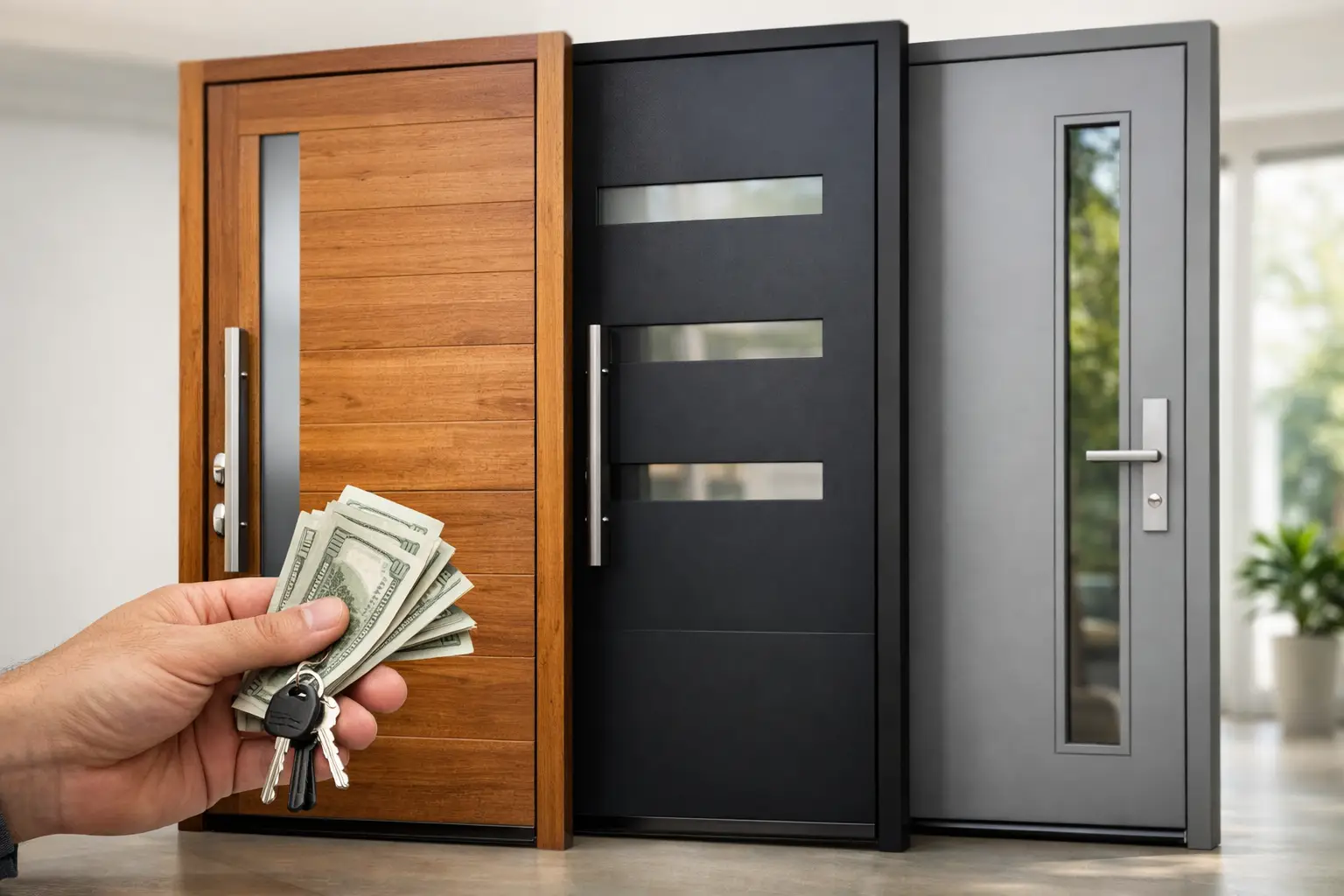
When clients ask how to choose modern entry doors, material is usually the first practical fork in the road. Wood, steel, fiberglass, and aluminum can all serve a modern design language, but they do not behave the same way over time.
Wood offers warmth and richness, but it demands maintenance and can be less predictable in severe exposure. In dry sun, freeze-thaw conditions, or high-elevation environments, movement and finish wear become serious specification concerns. Steel can deliver a crisp appearance and strong security, but thermal conductivity and long-term corrosion resistance need careful attention, especially if the system is not properly engineered.
Fiberglass is often selected for lower maintenance, but its visual refinement varies significantly by manufacturer. On highly architectural homes, it may not deliver the same precision in profile, finish, or scale as a more premium system. Thermally broken aluminum is often the stronger fit for contemporary residential architecture because it supports narrow sightlines, dimensional stability, larger formats, and a more exacting finish language. The thermal break is not a cosmetic upgrade. It is central to energy performance and comfort, particularly where cold winters and strong sun exposure create large temperature swings.
The key trade-off is this: some materials win on upfront familiarity, while others win on long-term stability, precision, and performance. For modern homes with large openings and a strict visual standard, that distinction matters.
Why thermal performance should not be treated as a secondary feature
Entry doors are touched, leaned on, and experienced up close. If the interior face of the system feels cold in winter or heat gain becomes obvious in summer, the door stops feeling premium very quickly. Good thermal performance affects comfort, condensation resistance, and HVAC efficiency.
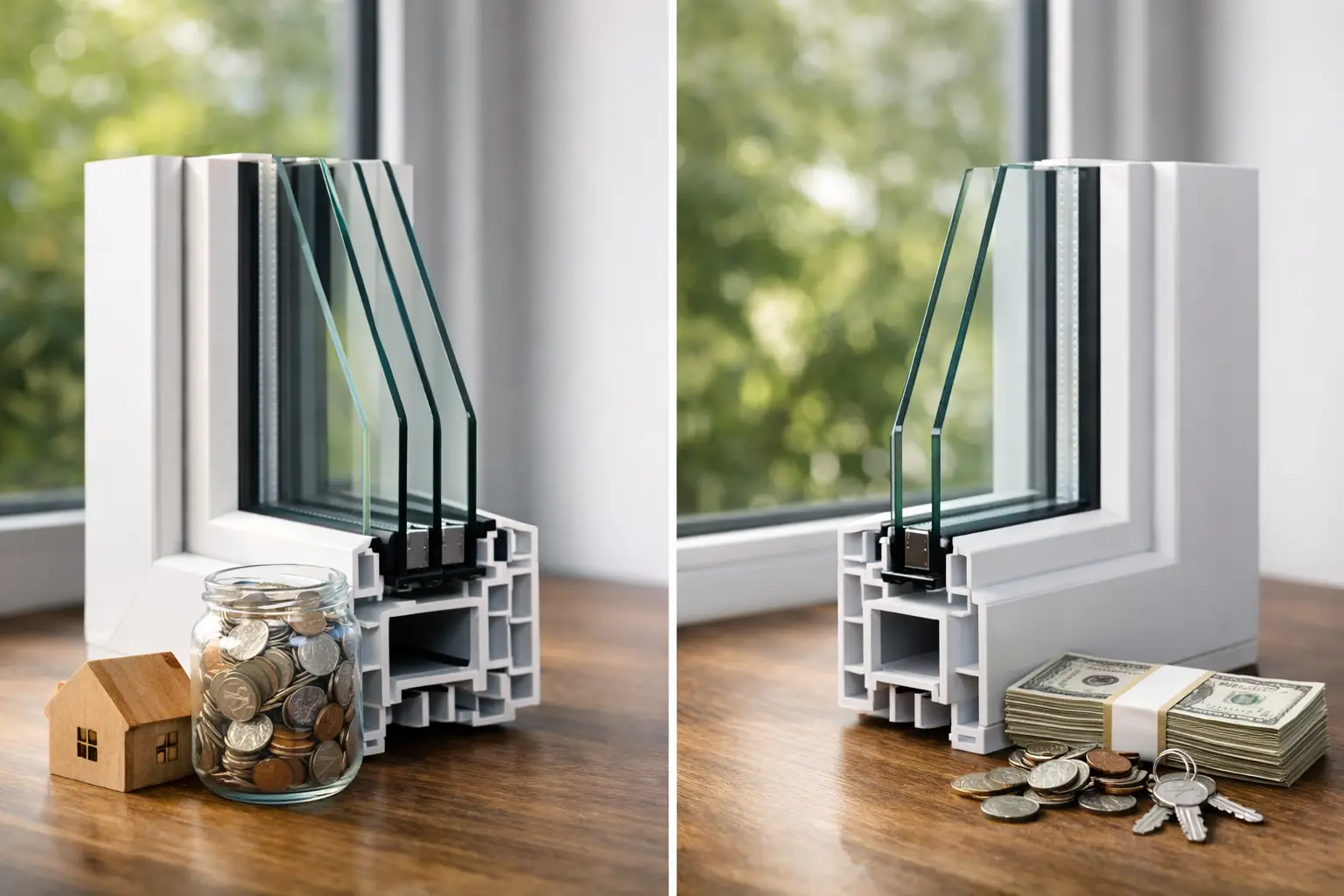
Frame design, insulated cores, glazing specification, perimeter seals, and threshold construction all contribute. In climates with real seasonal variation, you want a complete system approach rather than isolated product features. Low-E insulated glass, thermally broken framing, and well-designed weatherstripping should work together. Tempered Low-E2 glass as a standard specification adds value because it addresses both safety and energy performance without forcing the project into a costly custom upgrade.
Glass should support the architecture, not weaken the door
Glass is one of the defining elements in a modern entry door, but it needs restraint. Full-lite doors can create a striking presentation, especially with tall vertical proportions, but they are not right for every site. Street-facing privacy, direct western sun, and security expectations may call for a more controlled glass area or a sidelite composition instead.
Reeded, frosted, tinted, or strategically positioned glass can preserve daylight while limiting exposure. Sidelites and transoms often solve multiple problems at once. They increase light, emphasize height, and allow the door leaf itself to remain more solid and controlled.
The practical issue is structural and thermal balance. The more glass you introduce, the more important frame stiffness, edge detailing, and glazing performance become. A modern door should look light, but it cannot behave lightly.
Swing, pivot, and paired configurations each change the experience
The opening type should fit how the home is used. Standard hinged doors remain the most versatile choice for many residences because they are familiar, easier to weather-seal, and often more straightforward from a hardware and maintenance standpoint. For many projects, a well-designed swing door delivers the clean modern expression clients want without unnecessary complication.
Pivot doors create a more dramatic entry sequence and can accommodate larger panels with a distinctly architectural presence. They are especially effective in homes with generous setbacks, taller ceilings, and a strong axis from exterior to interior. But pivot systems need more planning. Hardware loads, swing clearance, wind exposure, and threshold detailing all become more critical.
Paired doors or doors with sidelites can be the right middle ground when a broader opening is needed without committing to a full pivot configuration. The correct choice depends on scale, frequency of use, and how formal the arrival experience should feel. Visual drama is valuable, but so is daily practicality.
Hardware is not a finishing touch
On modern entry doors, hardware is part of the architecture. Pull bars, concealed closers, multipoint locking systems, and minimalist lever sets directly affect both appearance and function. Cheap or undersized hardware will undermine even the best door panel.
Specification should account for weight, frequency of use, security requirements, and finish durability. Long vertical pulls can reinforce scale on taller doors, but they must feel proportionate rather than oversized. Multipoint locking is especially important on larger or more exposed doors because it improves compression, security, and weather resistance.
Finish selection deserves equal discipline. Black, bronze, stainless, and custom powder-coated options all work in modern settings, but consistency across adjacent windows, railings, and exterior metals is what gives the project its finished quality.
Finish, color, and sightlines shape the door's longevity
Modern design tends to reward restraint. A door with clean surfaces, a precise finish, and a well-resolved frame profile will usually age better than one that chases a trend. Matte and low-sheen finishes generally support contemporary architecture better than high-gloss treatments, especially when the surrounding palette includes stone, concrete, wood, or large-format glass.
Color should be chosen in context with the entire envelope. Dark finishes can create strong contrast and visual depth, but they also absorb more heat. Lighter metallics and muted architectural tones often reveal profile refinement more clearly. The best choice depends on orientation, facade composition, and how much the door should stand apart from the wall.
Sightlines are just as important as color. Modern entry systems benefit from frame profiles that feel deliberate and quiet. Thick, bulky framing can make a premium home look dated. Extremely thin framing, however, only works if the engineering supports it. Refined sightlines should come from structural confidence, not visual compromise.
Coordination matters as much as the product itself
Even an excellent door will disappoint if it is specified too late or installed without coordination. Entry systems affect waterproofing, framing tolerances, floor buildup, electrical planning for access control, and surrounding glazing alignment. They should be discussed early, ideally while facade and structural decisions are still flexible.
This is particularly true on custom homes, where entry doors are often oversized, highly visible, and closely tied to the overall language of the project. Factory-direct collaboration can help reduce disconnects between design intent and delivered product, especially when custom dimensions, hardware packages, and finish requirements are involved. That is one reason firms like ViewLux Colorado are often part of the conversation earlier in the process.
When evaluating a manufacturer, look beyond the showroom impression. Ask about thermal values, hardware quality, glazing standards, lead times, finish options, and tolerance for custom work. A modern entry door is not just a design object. It is a system, and systems should be judged on measurable performance.
The right door should feel inevitable once it is installed - proportionate to the architecture, quiet in operation, stable through the seasons, and precise in every visible line. If you choose with that standard in mind, the entry will hold its value long after first impressions fade.