Best Windows for Modern Architecture
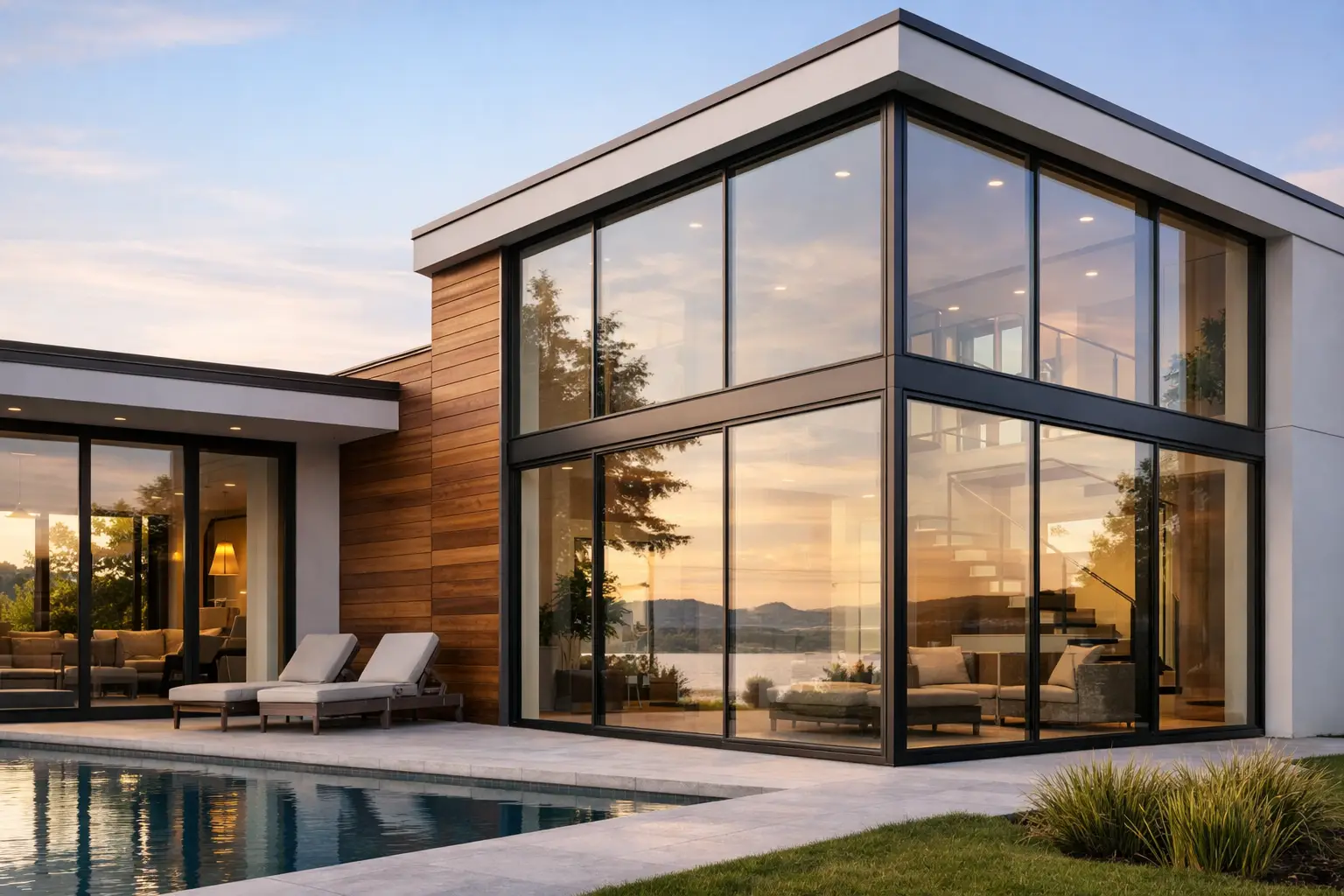
A modern home can lose its architectural clarity fast when the window package is wrong. The proportions feel heavy, the frames interrupt sightlines, and the glass underperforms when winter temperatures drop. Choosing the best windows for modern architecture means balancing visual restraint with structural capability, thermal performance, and the realities of how a building will be lived in.
For architects, builders, and homeowners specifying high-end residential projects, the question is rarely just which window looks modern. The better question is which systems preserve the design intent while meeting performance demands in a climate that can shift from intense sun to snow, wind, and subfreezing nights.
What defines the best windows for modern architecture?
Modern architecture typically asks more from a window system than traditional construction. Larger openings, narrower frames, cleaner detailing, and stronger indoor-outdoor relationships all put pressure on the product. A window that works well in a conventional suburban elevation may feel visually bulky or technically limited in a contemporary facade.
The best windows for modern architecture usually share a few core traits. They have refined sightlines, disciplined frame geometry, and profiles that support larger expanses of glass without appearing overbuilt. They also need to perform thermally, because modern design often reduces ornamental shading and relies more heavily on glass placement, orientation, and envelope efficiency.
Material selection is central here. While wood and vinyl both have their place, thermally broken aluminum is often the strongest fit for premium modern residential work. It supports narrow profiles, crisp corners, durable finishes, and larger dimensions while addressing one of aluminum's historic weaknesses - heat transfer. In demanding climates, that thermal break matters as much as the aesthetic.
Frame material matters more than most people expect
Modern design tends to expose every decision. Thick frames are more visible. Inconsistent finish quality is more noticeable. Awkward intersections at corners or mulled units stand out immediately.
That is why aluminum has become a preferred material in contemporary architecture, particularly when the goal is expansive glass and precise detailing. It offers the structural strength needed for larger openings and more ambitious configurations. The trade-off is that not all aluminum systems perform equally. Standard aluminum can struggle in cold climates, so thermally broken systems are the more credible specification when energy performance is part of the brief.
Vinyl can offer respectable thermal values, but it often falls short aesthetically in modern applications. The frame dimensions tend to be bulkier, color and finish options are more limited, and larger units can be harder to execute with the same level of refinement. Wood brings warmth and character, but that is not always the desired expression in a sharply contemporary envelope, and long-term maintenance can become a concern depending on exposure.
For projects seeking clean lines, durability, and strong thermal control, thermally broken aluminum often presents the most complete solution.
Window styles that suit modern architecture best
The right style depends on how the facade is composed and how the interior uses light, air, and view. There is no single best window type for every modern project, but several categories consistently align with contemporary design priorities.
Fixed windows for pure glass and uninterrupted views
Fixed windows are often the strongest visual match for modern architecture because they allow the glass to lead. Without operable hardware or sash lines interrupting the opening, the result is simpler and more monolithic. This is especially useful in homes that frame mountain, city, or desert views where visual continuity is part of the architecture.
The limitation is obvious - they do not provide ventilation. For that reason, fixed units are often paired with operable windows in less visible locations or integrated into larger compositions where only selected panels open.
Casement windows for ventilation with cleaner sightlines
When operability matters, casement windows are frequently the best compromise between function and minimalism. They offer a tighter, more contemporary expression than many double-hung systems and can provide excellent ventilation and weather sealing when engineered well.
From a performance standpoint, casements are a strong choice for climates with meaningful seasonal swings. They typically compress tightly against the frame, which can help with air infiltration control. In modern homes, they are especially effective when sized carefully and aligned with the larger facade grid.
Sliding windows for horizontal compositions
Sliding windows can work well in modern architecture where the facade emphasizes long horizontal lines. They are practical, visually clean, and easy to operate. In some contexts, they also support a quieter interior expression because they do not project inward or outward.
Their trade-off is that they usually do not open as completely as casement systems, and the meeting rail can be more visually pronounced. Quality matters here. Poorly executed sliders can feel builder-grade very quickly, while well-designed aluminum systems can maintain a more architectural character.
Awning windows for discreet ventilation
Awning windows are often used as supporting elements rather than focal points. In modern architecture, they can be placed high on walls, integrated with fixed glass, or used in bathrooms and secondary spaces where privacy and controlled ventilation are both needed.
They are particularly useful when designers want operability without disrupting the primary view window. The appearance stays disciplined, and the opening function remains practical.
Corner and specialty windows for architectural impact
True modern architecture often pushes beyond standard punched openings. Corner windows, oversized picture units, and custom-shaped glazing can sharpen the geometry of a home and reinforce the idea that the facade is being carved by light rather than simply decorated.
These applications demand more from the manufacturer. Structural integrity, glass specification, drainage strategy, and thermal detailing all become more critical as complexity increases. The visual payoff can be exceptional, but only when the system is engineered as carefully as it is drawn.
Glass performance is not secondary
A sleek frame cannot compensate for poor glass specification. In modern residential design, especially at higher elevations or in regions with strong sun exposure, the glass package has a direct effect on comfort, energy consumption, glare control, and furniture fade.
Low-E coatings should be considered standard in premium applications, not an upgrade. Tempered glass is also often essential depending on location and code requirements. The right insulated glass configuration depends on orientation, size, and climate, but the principle is simple: as glass area increases, the importance of glass performance increases with it.
This is where many attractive window systems fall apart under scrutiny. They may photograph well, but if they cannot maintain thermal consistency across a large modern envelope, they create discomfort near the glass line and put more pressure on the HVAC strategy. Good specification protects both the design and the experience of living with it.
Size, proportion, and detailing decide the final result
The best modern windows are not just products. They are part of a composition. Frame dimensions, sightline consistency, mull patterns, and how the window meets adjacent materials all affect whether the building feels resolved.
This is why oversimplified buying advice can be misleading. Bigger is not always better. A wall of glass may be appropriate in one elevation and a mistake in another if orientation, privacy, or heat gain are not addressed. Similarly, ultra-thin frames can be visually compelling, but they still need to support the opening size, wind load, and performance requirements of the project.
In practice, successful specification usually comes down to discipline. Keep the sightlines consistent. Match the operable units to the fixed glass language. Avoid forcing traditional window types into a modern elevation where they do not belong. And pay close attention to how the product interfaces with recessed openings, flush finishes, and interior trim conditions.
Choosing for mountain and high-performance homes
In Colorado and similar Rocky Mountain conditions, modern window selection carries a higher performance burden. Large day-night temperature swings, snow, UV exposure, and elevation all expose weaknesses quickly. That makes thermal break design, hardware quality, finish durability, and glass specification more than technical details. They are fundamental to long-term performance.
For high-end residential projects, factory-direct sourcing can also be a meaningful advantage. It can improve control over customization, reduce pricing inefficiencies, and allow closer coordination between design intent and the final manufactured system. That is particularly valuable on custom homes where standard sizes and off-the-shelf configurations do not align with the architecture.
ViewLux Colorado operates in this category - supplying thermally broken aluminum systems with slim profiles, large-format capability, and low-E tempered glass as standard for projects where aesthetics and performance need to work together.
The best windows for modern architecture are the ones that disappear in the right ways and perform in all the ways that matter. If the frames recede, the glass feels intentional, and the home stays comfortable through every season, the specification is doing its job.