
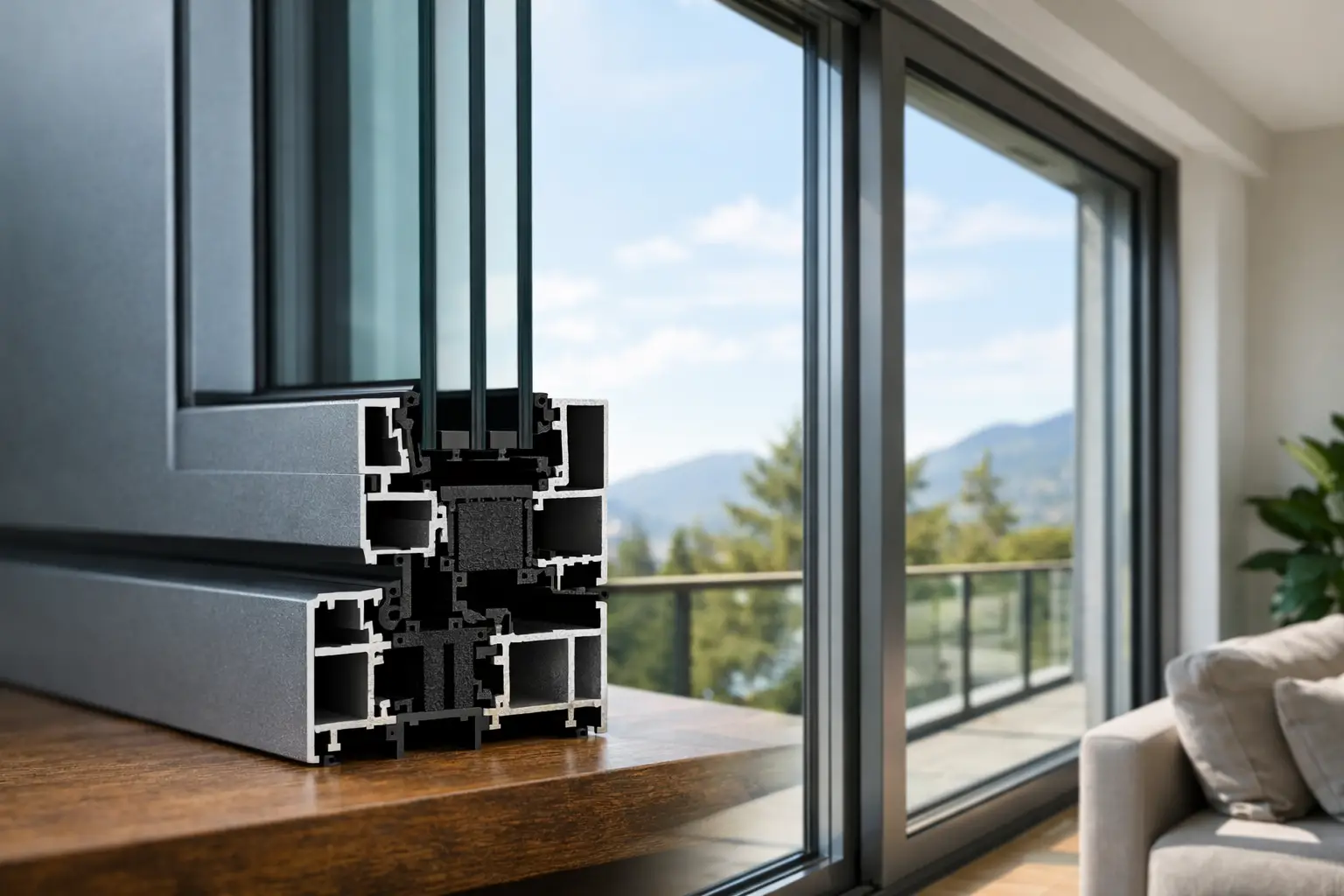
A wall of glass can look effortless on paper. In a Colorado winter, it becomes a performance test. That is where thermally broken aluminum windows separate architectural intent from compromise. They make it possible to specify slim, modern frames and expansive glazing without accepting the cold interior surfaces, condensation risk, and energy loss associated with older aluminum systems.
For architects, builders, and homeowners working in the Rocky Mountain region, the appeal is straightforward. Aluminum delivers structural strength, dimensional stability, and refined sightlines that are difficult to match with bulkier materials. The thermal break is what makes that strength viable in a climate with sharp daily swings, intense sun, snow, and prolonged heating seasons.
What thermally broken aluminum windows actually are
A thermally broken aluminum window uses two separate aluminum sections - one toward the exterior and one toward the interior - connected by a nonconductive barrier. That barrier, often a polyamide strip or similar engineered material, interrupts the direct path for heat transfer through the frame.
Without that separation, aluminum acts as a highly efficient conductor. Exterior cold moves inward quickly in winter, and exterior heat moves inward in summer. The result is a frame that works against the insulated glass it surrounds. A thermal break changes that equation by reducing conductivity at the frame, which is traditionally the weak point in metal window systems.
This distinction matters because window performance is never only about the glass package. Even a high-performing insulated glass unit can be undermined by a frame that transmits energy too easily. In premium residential and architectural work, the frame and glazing need to perform as a system.
Why thermally broken aluminum windows matter in mountain climates
Colorado is not a forgiving environment for fenestration. High elevation increases solar exposure. Winter temperatures create large indoor-outdoor differentials. Shoulder seasons can shift from warm afternoons to freezing nights. Add wind, snow, and low humidity, and material behavior becomes highly visible.
In that setting, thermally broken aluminum windows offer three practical advantages.
The first is improved energy performance. By reducing conductive heat loss through the frame, they support lower overall U-values and better interior comfort near the glass line. That becomes especially important in homes with large fixed units, corner conditions, or multi-panel openings where frame performance is multiplied across the elevation.
The second is condensation control. Condensation is not just a nuisance. It can affect finishes, obscure views, and create long-term durability concerns around adjacent materials. Warmer interior frame temperatures help reduce the likelihood of condensation forming when interior humidity meets cold surfaces.
The third is design freedom. Mountain architecture often asks for large spans of glass, narrow profiles, and crisp detailing. Thermally broken aluminum systems allow those visual goals to remain intact while addressing the climate reality behind them.
The performance difference is not just about insulation
It is tempting to reduce the conversation to R-values and product labels, but specification decisions are rarely that simple. A well-designed thermally broken system improves the lived performance of a building in ways that clients notice immediately.
Interior comfort is one of them. Occupants sitting near a large glazed opening are sensitive to radiant temperature differences, drafts, and cold frame surfaces. A better thermal barrier helps reduce that discomfort, even when air temperature in the room appears consistent.
Acoustic control can also benefit, depending on the full assembly. While the thermal break itself is not an acoustic feature in isolation, higher-grade systems often pair advanced frame construction with insulated glazing options that improve sound attenuation. In urban foothill sites, wind-exposed lots, or homes near road corridors, that can matter.
Durability is another factor. Repeated thermal stress affects materials, seals, and finish performance over time. Systems engineered for demanding climates tend to account for expansion, contraction, drainage, and pressure management more carefully than commodity aluminum windows built for milder regions.
Where aluminum outperforms other frame materials
There is no perfect frame material for every application. The right choice depends on span, exposure, budget, maintenance expectations, and the architectural language of the project. Still, thermally broken aluminum occupies a distinct position in the market because it solves a combination of structural and aesthetic demands that other materials often address only partially.
Compared with vinyl, aluminum is significantly stronger and more dimensionally stable. That allows for slimmer profiles, larger glass units, and more disciplined detailing. In high-end residential design, those proportions are not cosmetic. They shape daylight quality, view preservation, and facade composition.
Compared with wood, aluminum offers a lower-maintenance exterior and a more contemporary visual profile. Wood has undeniable warmth and can be appropriate in many homes, but it also introduces maintenance cycles and different dimensional behavior in exposed conditions.
Compared with fiberglass, aluminum often provides a sharper architectural appearance and more flexibility for oversized openings or complex modern assemblies. Fiberglass can perform well thermally, but the visual language and engineering possibilities are not always equivalent, especially where minimal sightlines are central to the design intent.
The trade-off is cost. High-quality thermally broken aluminum windows are a premium product, particularly when specified with large-format glazing, custom finishes, and specialized configurations. That said, in projects where appearance, strength, and long-term performance are central, they are often the more coherent specification rather than the more expensive one.
What to look for beyond the phrase itself
Not all thermally broken systems perform at the same level. The phrase can describe a broad range of products, from entry-level commercial assemblies to highly engineered residential window platforms.
The depth and design of the thermal barrier matter. So does the frame geometry, glazing pocket, weather sealing strategy, hardware quality, and overall integration of sash and frame. Narrow sightlines are desirable, but they should not come at the expense of air infiltration performance or structural capacity.
Published test data matters as well. U-value, solar heat gain coefficient, air infiltration, water resistance, and structural performance should be reviewed together. In the Rockies, a product that looks compelling in elevation may still be poorly matched to the site if its tested performance does not align with elevation, exposure, or code requirements.
Finish quality deserves attention too. Aluminum is often chosen because it supports a refined, modern appearance. That expectation should extend to coating durability, color consistency, and long-term resistance to UV exposure. A premium system should perform technically and age with the same discipline.
Best applications for thermally broken aluminum windows
These systems are particularly well suited to contemporary custom homes, mountain residences, and architect-driven remodels where glazing is doing more than bringing in light. They are ideal when the window is part of the architectural expression.
Fixed picture windows are a natural fit because aluminum can support expansive glass with minimal frame interruption. Casement and awning units benefit from the same clean lines while offering controlled ventilation and strong weather performance. Sliding systems can work well where large openings and horizontal emphasis are priorities, though performance depends heavily on the quality of the system and the scale of the panel.
Corner windows, oversized punched openings, and mixed window-door compositions are also strong use cases. In these conditions, the structural discipline of aluminum supports more ambitious geometry without making the facade feel heavy.
For builders and developers, the practical value is coordination. When a project includes multiple window types, large door panels, and specialty conditions, a cohesive thermally broken aluminum platform can simplify detailing and maintain visual consistency across the envelope.
Specification decisions that shape results
A good product can still underperform if it is specified casually. Early coordination is essential, especially on projects with deep wall assemblies, exterior insulation, recessed openings, or complex waterproofing strategies.
Frame placement within the wall affects thermal continuity and appearance. Glass selection affects solar gain, glare, and seasonal comfort. Hardware and operable type affect ventilation performance and user experience. Installation quality affects nearly everything.
This is where direct manufacturer engagement can be valuable. Rather than forcing a project into dealer inventory or standard package logic, a factory-direct process allows the window system to be matched to actual design and climate conditions. For a company like ViewLux Colorado, that alignment between product engineering, customization, and project support is part of the performance story, not an add-on service.
Thermally broken aluminum windows are not a trend product. They are a precise answer to a specific architectural challenge: how to preserve slender modern sightlines and large expanses of glass in climates that punish weak envelope decisions. If the project calls for clean detailing, structural confidence, and serious thermal performance, they are often the right place to start.